


 Patrick Zeis
Productivity advice usually focuses on changing what surrounds us: creating better schedules, eliminating distractions, setting clearer goals, or building more efficient routines. These strategies can be useful, but every system ultimately depends on the mind attempting to follow it. When attention is scattered, stress controls our reactions, or unconscious habits repeatedly pull us off course, even the best plan becomes difficult to sustain.
Meditation approaches productivity from the inside. Rather than helping us force more output, it develops our relationship with attention, thought, emotion, and effort. These capacities may support more focused and sustainable work, but that is neither an automatic result nor the whole purpose of practice. To understand meditation’s relevance to achievement, we first need to understand what the practice actually trains.
Meditation Is Fitness Training for the Mind
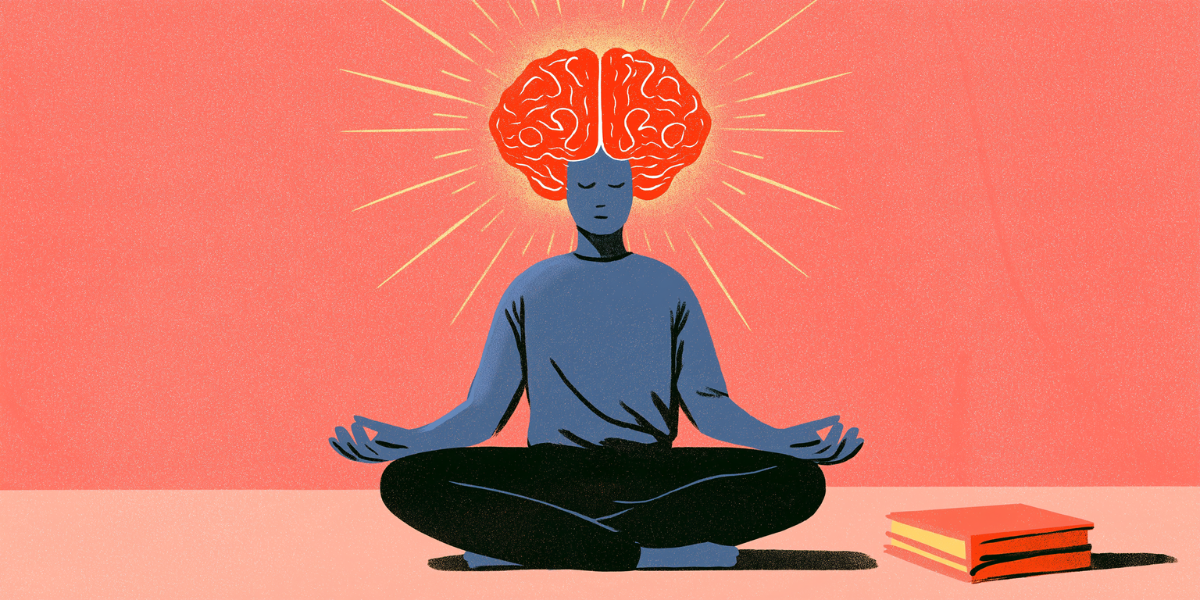
Meditation can be understood as a form of mental training. Just as physical exercise develops capacities of the body through repeated use, meditation exercises particular capacities of the mind through consistent practice. The analogy is imperfect—mental development is not as linear or easily measured as physical strength—but it helps explain why meditation involves more than sitting quietly and hoping to feel calm.
Two faculties are especially important: concentration and awareness. Concentration is the ability to stabilize attention on a chosen object, such as the breath. Awareness allows us to recognize what is happening in the mind while we do so. During practice, attention inevitably drifts into thought, memory, planning, or fantasy. Awareness recognizes that wandering has occurred, and concentration allows us to return.
Distraction is therefore not separate from the training. The moment we notice that the mind has wandered is part of the practice itself. Each return gives us another opportunity to release what captured our attention and begin again without turning distraction into a personal failure.
As with physical training, one meditation session is unlikely to produce a dramatic transformation. The value comes through repetition. Regular practice creates greater familiarity with directing attention, recognizing mental activity, and returning intentionally after we have become lost in it. Some sessions will feel steady; others will feel restless or scattered. Both can contribute to the training because the aim is not to manufacture a particular state, but to keep developing a more conscious relationship with the mind.
How Meditation Supports Focused and Sustainable Work

The relationship between meditation and productivity is indirect rather than automatic. Research suggests that mindfulness-based practices may produce modest improvements in some aspects of attention and executive functioning, but they do not guarantee better performance or professional success. Their practical value lies in how greater concentration and awareness can influence the way we meet distraction, stress, habitual behavior, and other people.
Trains Attentional Focus and Control:
Productive work does not require remaining perfectly focused at all times. It requires recognizing when attention has wandered and being able to return it to what matters. This is the same basic movement practiced repeatedly during meditation.
Away from formal practice, attention may be captured by an incoming message, an unrelated thought, the urge to check a phone, or discomfort with a difficult task. Meditation does not remove these distractions, but it may make the moment of capture easier to recognize. Instead of automatically following every impulse, we gain another opportunity to redirect attention toward the work we intended to do.
This can support longer periods of meaningful engagement, but the benefit is not a mind that never wanders. It is a mind that becomes more practiced at returning.
Reveals Habits, Intentions, and Limitations:
Many obstacles to productivity operate beneath conscious awareness. We procrastinate when a task threatens our confidence, perfect minor details to avoid more consequential work, or pursue goals because they promise approval rather than because they genuinely matter to us.
Meditation creates opportunities to observe these patterns more clearly. Thoughts such as “I am not capable of this” or “I must do this perfectly” can begin to be recognized as mental events rather than unquestioned facts. That recognition does not automatically remove limiting beliefs, but it can reduce the extent to which they dictate behavior.
Awareness also helps us recognize our limitations. Fatigue, emotional overload, and declining concentration are not always problems to overcome through greater discipline. Sometimes they are information indicating that we need rest, support, a different strategy, or more realistic expectations. Sustainable work depends partly on knowing when to continue and when continued force is becoming counterproductive.
Creates Space Around Stress and Emotional Reactivity:
Work inevitably produces frustration, uncertainty, criticism, competing demands, and interpersonal tension. When these experiences trigger immediate emotional reactions, we may send the defensive message, abandon the difficult task, make a rushed decision, or carry one stressful interaction into the rest of the day.
Meditation trains us to notice thoughts, emotions, and bodily reactions without responding to them immediately. That pause does not eliminate stress, but it can create enough space to choose a more considered response. We may still need to address a problem directly, set a boundary, or express disagreement; we are simply less likely to do so from the most reactive part of the experience.
Meditation cannot compensate for an unmanageable workload or an unhealthy workplace. It may, however, help us recognize stress earlier, recover more deliberately, and respond with greater clarity before pressure becomes chronic exhaustion.
Supports Empathy and Relational Awareness:
Productivity and success are rarely individual achievements. Most meaningful work depends upon communication, cooperation, trust, leadership, and the ability to understand how our behavior affects other people.
Mindful awareness can make us more conscious of what happens during an interaction: the impulse to interrupt, the defensiveness beneath an argument, or the moment attention drifts while someone else is speaking. Compassion and loving-kindness practices more directly cultivate goodwill and concern for others, complementing the self-awareness developed through mindfulness.
These capacities can support emotional intelligence by helping us listen more carefully, recognize perspectives beyond our own, and respond to conflict with less automatic defensiveness. Meditation does not guarantee empathy or ethical behavior, but it can create conditions in which relational habits become more visible and thoughtful engagement becomes more possible.
Together, these capacities may help us work with greater focus, steadiness, and consideration. Yet meditation can do more than improve how we pursue existing goals. It can also change our understanding of which goals are worth pursuing and what a successful life should ultimately contain.
Why Meditation Can Lead to a Wiser Form of Success

Achievement often carries an implicit promise: once we reach the goal, earn recognition, or establish enough security, we will finally feel complete. Yet the satisfaction created by success rarely remains as intense as we expect. Accomplishments become familiar, new desires appear, and the mind begins orienting itself toward the next outcome. Psychology describes this pattern as hedonic adaptation; Buddhist traditions examine it through the recurring relationship between craving and dissatisfaction.
Meditation allows us to observe this process as it unfolds. We notice how quickly the mind reaches for what it wants, resists what it dislikes, and ties emotional well-being to conditions that continually change. This does not make desire inherently wrong or require us to abandon ambition. It helps us recognize the instability of asking achievement to provide lasting contentment, identity, or self-worth.
Awareness of impermanence can also loosen our attachment to particular outcomes. Careers change, recognition fades, circumstances shift, and even meaningful accomplishments eventually belong to the past. When this is understood more deeply, success does not become meaningless. We become less likely to treat one result as though it can permanently secure who we are.
Meditation also creates distance from the identities built around achievement. Thoughts such as “I am successful,” “I am a failure,” or “I am only valuable when I am productive” can be observed without becoming absolute definitions of the self. This non-identification allows us to care about the quality of our work without making every outcome a verdict on our worth.
A wiser form of success can still include discipline, growth, financial stability, and ambitious goals. But it also makes room for relationships, ethical conduct, contribution, health, inner balance, and the ability to appreciate life before the next achievement arrives. We continue pursuing what matters while becoming less dependent upon accomplishment to make us whole.
The Deeper Purpose of Meditation Extends Beyond Productivity

If meditation is discussed only in terms of focus and professional performance, it can easily become another instrument of achievement culture—a way to tolerate greater pressure, produce more work, and optimize the self without questioning whether the underlying pattern is healthy.
Within Buddhist contemplative traditions, meditation serves a much deeper purpose. Concentration and mindful awareness are cultivated not merely to improve performance, but to see experience more clearly. Through practice, we begin examining how craving, aversion, clinging, and identification create suffering. The aim is not simply to make the existing mind more efficient, but to loosen the patterns that keep it trapped.
This changes the questions meditation asks of us. Instead of only asking how we can become more focused, it asks what continually captures our attention. Instead of merely helping us accomplish more, it reveals why we believe more accomplishment will finally be enough. Rather than strengthening an identity indefinitely, it invites us to investigate the changing and conditioned processes from which that identity is constructed.
Practicing solely for productivity can also bring the same striving found at work onto the meditation cushion. We begin measuring minutes, protecting streaks, judging distracted sessions, and evaluating practice according to whether it produces the desired result. Meditation then becomes another arena in which we attempt to prove or improve ourselves.
Greater focus, steadier emotions, and clearer decisions can be valuable consequences of practice, but they remain possible byproducts rather than its deepest purpose. Meditation ultimately concerns freedom from unnecessary suffering and a more honest relationship with ourselves and reality. Sometimes that freedom may help us work more effectively. At other times, it may help us recognize that no increase in productivity is worth sacrificing the life our work was meant to support.
Meditation Is a Lifelong Practice Undertaken One Day at a Time

Meditation is not a project we eventually complete. Attention will continue to wander, difficult emotions will arise, and old habits may return even after years of practice. The aim is not to construct a permanently calm or perfectly optimized mind, but to keep meeting experience with greater awareness and begin again whenever we become lost.
Because these capacities develop through repetition, regular practice matters. Yet sustainability is more valuable than an ambitious routine that quickly becomes impossible to maintain. Five or ten minutes of daily practice can provide a realistic beginning. Choose a simple object such as the breath, notice when attention wanders, and return without treating distraction as failure. If a day is missed, the practice is resumed rather than abandoned.
Over time, meditation also extends beyond formal sitting. Awareness begins appearing while we work, speak, make decisions, rest, and respond to difficulty. We gradually become more capable of recognizing when attention has scattered, when emotion is influencing behavior, or when striving has pulled us away from what matters.
Practice should remain responsive to individual needs. If meditation repeatedly intensifies anxiety, traumatic memories, dissociation, or other distress, it may be appropriate to modify or pause the practice and seek guidance from a qualified teacher or mental-health professional.
Meditation may help us become more focused and effective, but its greater value lies in learning how to inhabit our lives with wisdom and freedom. That development has no final finish line. It unfolds through the practice we undertake today, followed by the willingness to return again tomorrow.


2 comments
I LOVE THIS: TO MEDITATE IS TO FREE YOURSELF