


 Patrick Zeis
With bestselling titles from iconic voices and revolutionary ideas for self-transformation, 2025 offered countless pathways toward meaning and fulfillment. Over the past twelve months, we’ve explored more than four hundred new books charting the evolving frontiers of human growth—spanning psychology, spirituality, and self-help—and now, as December brings both reflection and renewal, we reexamine the year’s most transformative works across an ever-broadening range of categories. These new rankings spotlight the ideas continuing to shape the landscape of well-being by illuminating human flourishing through a seamless blend of timeless wisdom and modern insight.
Across genres and disciplines, the best emotional wellness, anxiety and depression books of 2025 converge on a single truth: healing isn’t about suppressing discomfort but learning to skillfully engage with it—transforming anxiety with curiosity, perfectionism with acceptance, and depression with compassion. Whether reshaping our relationship with feelings, teaching the daily habits of emotional fitness, or breaking free from habitual patterns of thought, these works collectively remind us that personal well-being is both a science and an art—an ever-evolving process of tending to ourselves just as we are.

10.) Flex Your Feelings — Dr. Emily Anhalt:
In Flex Your Feelings: Train Your Brain to Develop the 7 Traits of Emotional Fitness, clinical psychologist and Coa founder—an online platform often described as a gym for mental health— Emily Anhalt delivers a data-driven blueprint for developing seven traits of psychological well-being, skills she argues are as essential as any business or leadership strategy in today’s world. Framing emotional health as a set of capacities to be trained rather than a crisis to be managed, Anhalt offers practical exercises and real-world strategies for cultivating qualities such as mindfulness, curiosity, resilience, and empathy—one intentional flex at a time. In the book’s opening chapter, she writes:
Many people like to believe that if they’re not sick, they’re healthy. But talk to someone who prioritizes physical fitness—someone who sleeps eight hours a night, exercises, and eats well—and they’ll tell you, just because you aren’t ill, does not mean you’re physically fit. The same is true with emotional fitness—you might not be suffering from daily panic attacks, but that does not necessarily mean you are in good shape emotionally…. Transformation and personal growth demand consistent and directed effort. To develop as a human being and reach your full potential, you don’t need general principles. You need a regimen.
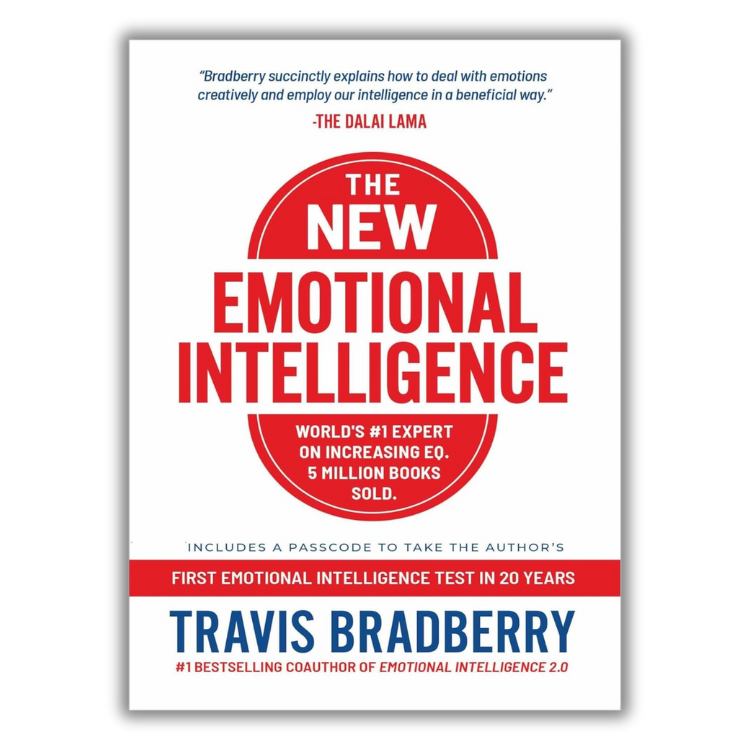
9.) The New Emotional Intelligence — Travis Bradberry:
Fifteen years after Emotional Intelligence 2.0 became a global phenomenon, Dr. Travis Bradberry returns with a new groundbreaking blueprint for mastering the core EQ skills—self-awareness, self-management, social awareness, and relationship management—in The New Emotional Intelligence. Drawing on the latest discoveries in neuroscience and psychology, Bradberry equips readers with 60 evidence-based “super strategies” designed to translate emotional insight into personal transformation, meaningful connections, and real-world change. With its accessible step-by-step approach, supplementary online tools, and praise from the likes of His Holiness the 14th Dalai Lama, The New Emotional Intelligence emerges as a masterclass in emotional mastery. In an interview promoting the book’s release, Bradberry said:
Increasing your emotional intelligence isn’t as daunting as most people think. You just need a solution that’s personalized to your needs and points you to the small changes you can make that will have an outsized impact on your behavior. Emotional intelligence is a foundational skill because emotions are the primary driver of our behavior. When you work solely on your EQ, you see changes happen in many important areas of your life that you weren’t expecting. It’s truly life changing.

8.) Dealing with Feeling — Marc Brackett:
What if the single most important determinant of your success wasn’t intelligence, talent, or luck, but how you respond to your emotions? In Dealing with Feeling: Use Your Emotions to Create the Life You Want, Yale professor and emotional intelligence pioneer Marc Brackett shows that emotional regulation is not a fixed trait but a skill that can be learned, practiced, and mastered. Blending personal reflection, scientific insight, and accessible strategies, Brackett equips readers with tools to harness their feelings as guides toward greater well-being, deeper relationships, and more meaningful accomplishment. In the book’s introduction, he writes:
There’s no magic involved in dealing with feelings. No one was born knowing how to regulate their emotions. If you can’t do it successfully, it’s likely because no one ever showed you how. Everything this book teaches is a practical skill, like so much of what you’ve learned. With practice, we can all deal with our feelings as we’ve always wished we could.

7.) High Functioning — Dr. Judith Joseph:
Psychiatrist and mental health advocate Dr. Judith Joseph addresses a growing phenomenon among high achievers—a silent exhaustion and lingering sadness hidden beneath success—High Functioning: Overcome Your Hidden Depression and Reclaim Your Joy. Through powerful storytelling and her practical Five V tool framework—Validation, Venting, Values, Vitals, and Vision—Joseph shows that true well-being isn’t born out of performance, external validation, or milestone achievements, but rather from the tender practice of slowing down, feeling deeply, and remembering that worthiness was never something to earn—it’s a universal birthright of the human heart. In the book’s opening chapter, she writes:
High-Functioning Depression knows no boundaries when it comes to age, finances, geography, gender, cultural status, or relationship status… People with High-Functioning Depression think of success as the only path to happiness. Healing can help a person realize they’re worthy of joy in life just as they are. Overcoming High-Functioning Depression can help you realize that in focusing on work and achievement, you’ve built the wrong life for yourself. Doing the work gives you a chance to uncover a new identity and create a new life for a new you.
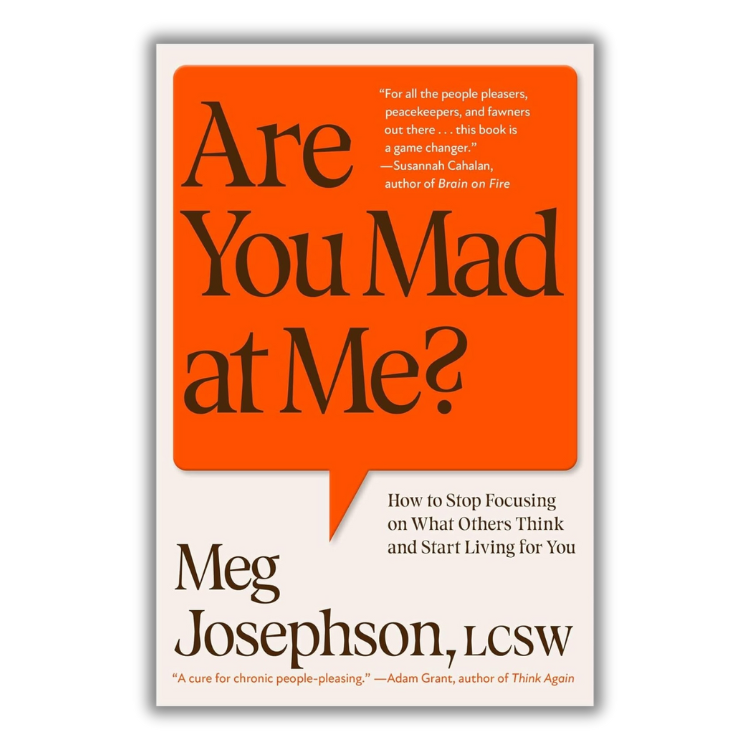
6.) Are You Mad at Me? — Meg Josephson:
Amid a culture of overthinking and persistent self-doubt, Are You Mad at Me?: How to Stop Focusing on What Others Think and Start Living for You offers a compassionate roadmap for breaking free from the chronic habit of people-pleasing and the anxieties that come from outsourcing self-worth to others’ opinions. Blending therapeutic insight with heartfelt reflection, psychotherapist Meg Josephson explores how the “fawn response”—a coping strategy usually formed in childhood—can quietly shape adult life, with fears of disapproval and chronic self-monitoring eroding authenticity and connection. Ultimately, Josephson shows how greater self-awareness and a deeper understanding of these early patterns can help us reclaim the personal agency and self-confidence we lost along the way. Josephson writes:
As humans, we’re hardwired to connect. We’re pro-social beings who naturally want harmony and belonging. Healing the fawn response does not push against that innate desire—it moves toward it. We can’t be connected to others if we’re not connected to ourselves. With fawning, we have to abandon ourselves in order to make the appeasing possible. We learn that the other person’s comfort is more important than our own, that we can’t feel okay until the other person is okay. We learn that, in order for us to feel safe, we need to keep the peace, whatever it takes. And as a result, we’re disconnected from questions such as What do I need? What do I think? What do I want?

5.) Beyond Anxiety — Martha Beck:
Harvard trained sociologist and celebrated self-help author Martha Beck flips the script on how we understand and experience the uneasiness of worry and fear in her instant New York Times bestseller Beyond Anxiety: Curiosity, Creativity, and Finding Your Life’s Purpose. Instead of viewing anxiety as a paralyzing roadblock that brings life to a standstill, Beck reveals how it can serve as a doorway to greater abundance, joy, and possibility. Drawing on insights from neuroscience, psychology, and Eastern spiritual traditions, she introduces the “creativity spiral” as a transformative framework for counteracting anxiety by cultivating curiosity, ingenuity, and wonder. Beck writes:
This way of living beyond anxiety is radically liberating. It sets us free in more ways than we can count: Free to sustain an ongoing inner state of peace and self-compassion. Free to interact with others with confidence and wisdom rather than insecurity and tension. Free to engage with the pressures of society as powerful navigators and path-builders rather than as hapless wanderers. Free to create our own futures and approach them not as random avalanches of frightening events but as unfolding beneficent miracles.
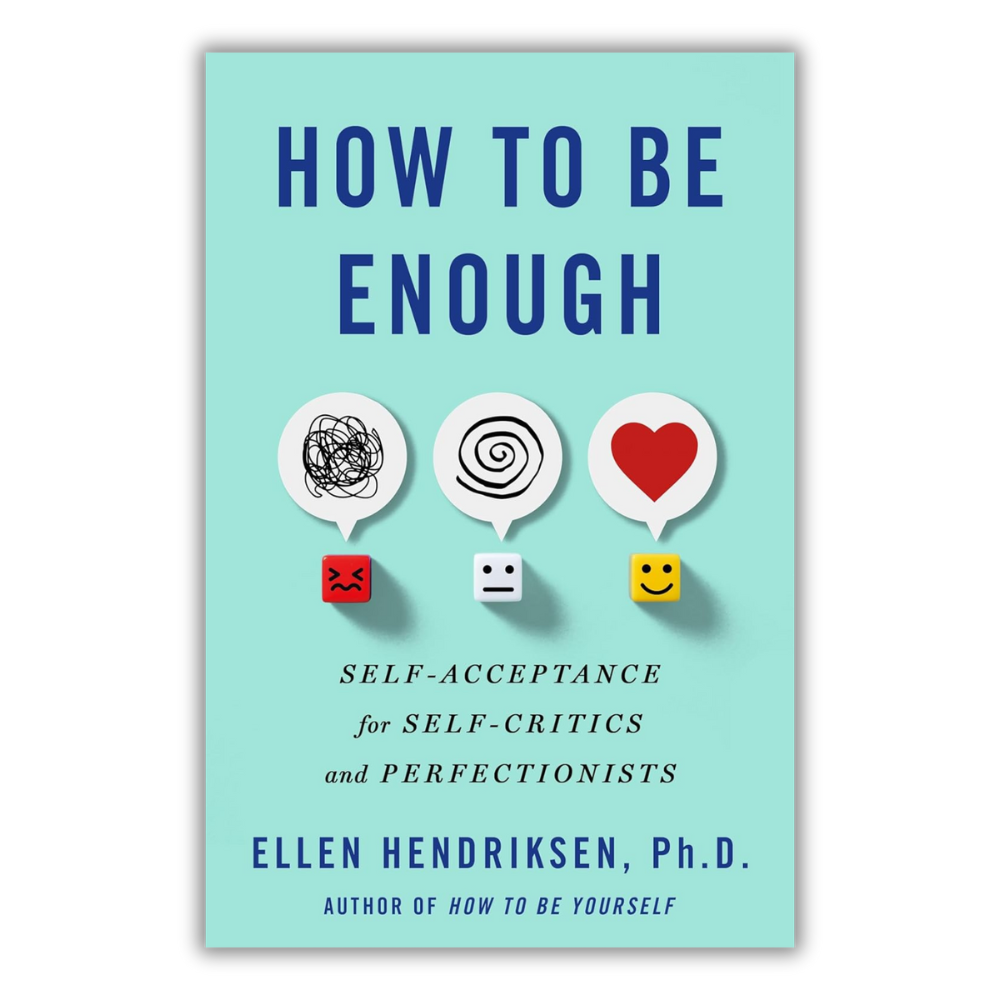
4.) How to Be Enough — Ellen Hendriksen:
Behind perfectionism’s polished facade lies a persistent voice of self-judgment, a relentless inner critic that whispers, ‘You’re not good enough.’ In How to Be Enough: Self-Acceptance for Self-Critics and Perfectionists, Boston University clinical psychologist Ellen Hendriksen offers a compassionate, research-backed blueprint for breaking free from self-deprecation and learning to embrace ourselves just as we are. Through seven transformative shifts—including moving from self-criticism to kindness, control to authenticity, and comparison to contentment—readers are invited to cultivate true personal empowerment by embracing their imperfections. In the book’s first chapter, Hendriksen writes:
Ultimately, perfectionism’s deepest wish is to be safe, accepted, and connected unconditionally, without having to perform at all. You’ve been working so hard for so long. We’re not going to abandon the hard work and high standards that make you you, but we will make more room for rest, joy, community, and connection. It’s time to welcome yourself home to your life and yourself. It’s time to take a breath, take a look around, and know, deep in your bones: I am worthy just as I am. I am enough.

3.) Shift — Ethan Kross:
Ever found yourself trapped in a cycle of anxiety or frustration, unsure how to break free? In Shift: Managing Your Emotions—So They Don’t Manage You, psychologist and best-selling author Ethan Kross provides a science-backed roadmap for mastering your inner world. Drawing on groundbreaking research and real-world case studies, Kross reveals how subtle shifts in self-talk can profoundly reshape emotional responses, enhance decision-making, and improve relationships. Whether navigating high-stress situations at work or diffusing conflict at home, Shift—hailed as a must-read by both Oprah Winfrey and Adam Grant—offers clear, actionable guidance for gaining control over emotions rather than letting them take control of you. Kross writes:
Our emotions, both the positive and the negative ones, are tools we use to navigate the world. They influence who we fall in love with and who we hate. They motivate us to stay longer hours at work to realize our dreams and rein in our aspirations when they no longer serve us. They can fill our lives with health and vitality or sap our energy when we lose sight of what matters… And yet, for all their profound impact on our lives, few of us receive a science-based guide for how to turn the volume on our emotions up or down, or how to transition gracefully from one emotional state into another.

2.) — Julie Smith:
In Open When: A Companion for Life’s Twists & Turns, clinical psychologist and bestselling author Julie Smith extends a steadying hand through life’s most turbulent moments. Presented across 26 chapters addressing universal challenges of emotional wellness and mental health—spanning three broad categories of being with others, being with ourselves, and being with our feelings—Smith offers transformative guidance through empathetic “Open When…” letters and evidence-based strategies for moving forward. With life’s ever-changing emotional tides, Open When serves as both a companion and a compass, helping readers travel the vast sea of feeling with grace and self-understanding. Smith writes in the book’s introduction:
In moments of pain or confusion, most of us struggle to be the voice that we need to hear, not because we are pathological in some way, but because we are all simply learning as we go… This book can serve only as a lighthouse. Unable to pull you from the water, but able to shine a light in this direction so that you can work out which way is up when confusion reigns. Use that as you will, but the work of navigating toward calmer waters is all yours.

1.) Mind Your Body — Nicole Sachs:
For decades, the medical field has treated chronic pain as a purely physical condition, yet millions remain trapped in cycles of suffering that defy diagnosis. In Mind Your Body: A Revolutionary Program to Release Chronic Pain and Anxiety, psychotherapist Nicole Sachs invites readers to consider a radical possibility: that the root cause of their pain may not be physical at all, but the body’s way of expressing unresolved emotional wounds and trauma. By illuminating the profound connection between body and mind, Sachs reveals that true relief from chronic pain—and from a variety of seemingly unrelated conditions such as anxiety, panic, and fatigue—emerges not through resistance, but through the courageous work of emotional processing and nervous system regulation. In the author’s note, Sachs writes:
Most chronic conditions originate from a dysregulated nervous system. It confusedly informs the brain to send signals of pain, inflammation, muscle constriction and spasm, neuralgia, and other physical and experiential manifestations to ‘protect and distract’ you from your overflowing repressed emotional reservoir. We, often unconsciously and for years, have lived in long-term, sustained fight or flight. Our health is failing as a result…. This book is an operating manual to change your life.
Balanced Achievement’s Best Books of 2025
The best books of the year do more than inform—they reshape how we see, think, and live. Below, you’ll find links to all our favorite titles released in 2025—spanning the genres of spirituality, psychology, and self-help—selected for their depth, originality, and capacity to offer lasting insight beyond the moment:
- The 50 Best Self-Help Books Released in 2025
- The 50 Best Psychology Books Released in 2025
- The 50 Best Spirituality Books Released in 2025
- The 25 Best Buddhism Books Released in 2025
- The 25 Best Mindfulness and Meditation Guidebooks Released in 2025
- The 10 Best Biographies and Memoirs Released in 2025
- The 10 Best Motivation and Mindset Books Released in 2025
- The 10 Best Physical Health and Longevity Books Released in 2025
- The 10 Best Fitness, Nutrition, and Weight Loss Books Released in 2025
- The 10 Best Relationships, Love and Intimacy Books Released in 2025
- The 10 Best Parenting Books Released in 2025
- The 10 Best Community, Connection, and Belonging Books Released in 2025
- The 10 Best Communication Skills Books Released in 2025
- The 10 Best Money and Personal Finance Books Released in 2025
- The 10 Best Career and Entrepreneurship Books Released in 2025
- The 10 Best Workplace Culture and Leadership Books Released in 2025
- The 10 Best Brain Fitness and Mental Health Books Released in 2025
- The 10 Best Emotional Wellness, Anxiety and Depression Books Released in 2025
- The 10 Best Grief and Trauma Recovery Books Released in 2025
- The 10 Best Hinduism Books Released in 2025
- The 10 Best Spiritual Ecology and Nature Books Released in 2025
- The 10 Best Non-Duality and Consciousness Books Released in 2025
- The 10 Best Psychedelics Books Released in 2025
Affiliate Link Disclosure: Balanced Achievement earns a commission when any of the books featured on our site are purchased directly through Amazon product links.

