


 Patrick Zeis
From emotional resilience to revenge addiction, May 2025’s standout psychology releases confront the mental and societal patterns shaping our lives. Each of these ten books delivers fresh insights into how we think, relate, and evolve in an age of complexity and distraction.

10.) The Adult Chair — Michelle Chalfant:
With a warm blend of psychology and spirituality, Michelle Chalfant’s The Adult Chair: Get Unstuck, Claim Your Power, and Transform Your Life offers a timely invitation to step into the emotional maturity and inner fortitude that so many of us were never taught in our youth. Grounded in her signature three-chair framework of human development—spanning the Child, Adolescent, and Adult seats—Chalfant, a licensed therapist and holistic life coach whose podcast has over 10 million downloads, guides readers to recognize how early experiences shape current thinking and behavior, and how adhering to five pillars of healthy adult living can free them from limiting beliefs and emotional entanglements. With a deeply human tone and accessible guidance for practices such as self-compassion and boundary setting, Chalfant makes the journey toward wholeness feel both approachable and profoundly achievable. She writes:
The Adult Chair model takes you through the timeline from birth to where you are today in adulthood and helps you to understand where you might have missed an important developmental milestone or lesson… When you can identify these missed lessons and then understand how they are affecting your current life, the light bulbs start coming on. Life starts to make sense. We have a raised awareness of how we are not showing up in a healthy way today and what we would like instead. We begin to realize there is another way, and the Adult Chair model provides the road map for how to shift the areas of our lives where we feel stuck and begin to create an updated or new road map for our futures. You will begin to feel aligned with your true self, your soul self, and your whole world will begin to change.

9.) Flex Your Feelings — Dr. Emily Anhalt:
In Flex Your Feelings: Train Your Brain to Develop the 7 Traits of Emotional Fitness, clinical psychologist and founder of Coa, the online platform dubbed as your gym for mental health, Dr. Emily Anhalt delivers a data-driven blueprint for developing seven traits of psychological well-being—skills she argues are as essential as any business or leadership strategy in today’s world. Framing emotional health as a collection of capacities to be trained rather than a crisis to be managed, Anhalt provides practical exercises and real-world strategies for cultivating qualities such as mindfulness, curiosity, resilience, and empathy. At its core, Flex Your Feelings is a practical guide to building emotional strength from the inside out—one intentional practice at a time. Anhalt writes:
Many people like to believe that if they’re not sick, they’re healthy. But talk to someone who prioritizes physical fitness—someone who sleeps eight hours a night, exercises, and eats well—and they’ll tell you, just because you aren’t ill, does not mean you’re physically fit. The same is true with emotional fitness—you might not be suffering from daily panic attacks, but that does not necessarily mean you are in good shape emotionally… To develop as a human being and reach your full potential, you don’t need general principles. You need a regimen. To train for a triathlon, you don’t just read about running, biking, and swimming for two months. You set training goals based on your knowledge, train consistently using proven methods, and measure your progress to stay on track. You also eat well, get good sleep, and recruit emotional support from your community. No one finishes, let alone wins, a triathlon on a whim. It takes a trusted system and a daily commitment to action. A good system says: do these things in this order, and you will achieve the expected outcome by race day. Follow the program and get the results. Why should emotional fitness work any differently?

8.) Your Pain Has a Name — Monica DiCristina:
With grace, insight, and deep therapeutic wisdom, Monica DiCristina’s Your Pain Has a Name: A Therapist’s Invitation to Understanding Your Story and Sorting Out Who You Are from What Hurts empowers readers to overcome inner confusion, release shame, and free themselves from the false narratives that have been shaping their existence. To accomplish the goal of uncovering and transforming the thought patterns and limiting beliefs that prohibit us from living as our authentic selves, DiCristina—a distinguished Atlanta-based therapist—offers relatable anecdotes and proven psychological techniques for fostering greater self-understanding, moving beyond internalized falsehoods with non-identifying acceptance and embracing the path of personal healing. For anyone ready to unbind themselves from the emotional shackles of the past, Your Pain Has a Name is a compassionate companion that offers both solace and strength on the journey to authentically living in truth. DiCristina writes:
This book is a homecoming, a loving reunion with who you are. You are invited. Your pain, anger, frustration, your shame, every hurting part of you is welcome here. They all are great places to start your journey. You don’t have to have it mapped out or figured out. You are not a project to be fixed or a problem to be managed; you are a beautiful creation… Just be here, that’s all. That’s the invitation. There’s hope here, but no pressure. There’s no deadline for this journey, so there’s no rush. We naturally want things to go fast, especially when we are hurting. But faster is not always better. Start where you are, with where it hurts, which is the most compassionate place to begin. Together we will get there, no matter how long it takes. So let’s start here with What is hurting?
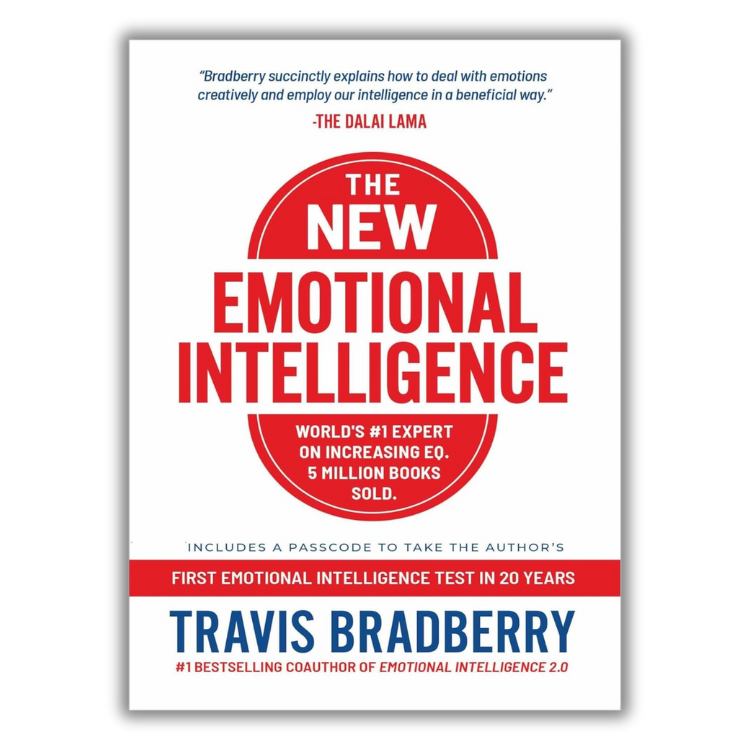
7.) The New Emotional Intelligence — Travis Bradberry:
Fifteen years after Emotional Intelligence 2.0 became a global phenomenon, Dr. Travis Bradberry returns with a new revolutionary blueprint for mastering the core EQ skills—self-awareness, self-management, social awareness, and relationship management—in The New Emotional Intelligence. Drawing on the latest discoveries in neuroscience and psychology, Bradberry equips readers with 60 evidence-based “super strategies” designed to translate emotional insight into meaningful personal transformation and real-world change. With its step-by-step approach, supplementary online tools, and praise from the likes of the His Holiness the 14th Dalai Lama, The New Emotional Intelligence is an empowering guide that makes it easier than ever to build the psychological skills that shape every aspect of a well-lived life. In a recently published LinkedIn article previewing the book, Bradberry writes:
Emotional intelligence is the ‘something’ in each of us that is a bit intangible. It affects how we manage behavior, navigate social complexities, and make personal decisions that achieve positive results. Emotional intelligence is made up of four core skills that pair up under two primary competencies: personal competence and social competence… Unlike your IQ, your EQ is highly malleable. As you train your brain by repeatedly practicing new emotionally intelligent behaviors, your brain builds the pathways needed to make them into habits. Before long, you will begin responding to your surroundings with emotional intelligence without even having to think about it. And as your brain reinforces the use of new behaviors, the connections supporting old, destructive behaviors will die off.

6.) Align Your Mind — Britt Frank, LSCSW:
What if the parts of yourself you’ve spent years repressing—the inner critic, the impulsive teen, the anxious voice—were actually keys to healing, wholeness, and inner harmony? In Align Your Mind: Tame Your Inner Critic and Make Peace with Your Shadow Using the Power of Parts Work, prominent psychotherapist and trauma expert Britt Frank delivers a compassionate and empowering roadmap for transforming inner conflict into emotional clarity. Blending Internal Family Systems (IFS) theory with lived clinical experience, Frank equips readers with the insight and techniques—from self-dialogue to embodiment practices—needed to turn self-sabotage into a peaceful inner unity. Frank writes:
This book is for anyone who wants to feel more empowered, to make decisions faster, and to understand themselves better. Most of us have tried (and failed) to logic our way into good decisions, to positive-think ourselves through impostor-y moments, or to ignore our inner critics. Who among us hasn’t felt out of alignment? To be in alignment means to be in a position of agreement or alliance. When your choices are aligned with your values and beliefs, you feel empowered and centered. When you’re aligned, you become the best version of yourself, and you enter a state of flow. When you’re doing things that don’t align with who you want to be, the result is unease and lack of control.

5.) Self-Obsession — Tom Davies:
In Self-Obsession: How Our Need for Identity Threatens Our Wellbeing, English physician and therapist Tom Davies illuminates how our compulsive drive to construct and cling to a fixed identity lies at the very root of human suffering. With piercing clarity, Davies reveals how discontent so often originates from the relentless effort to define, defend, and champion the self—and how peace becomes possible when we begin to loosen identity’s grip through non-identifying awareness and deeper self-understanding. Equal parts contemporary psychological inquiry and ancient philosophical reflection, Self-Obsession offers a transformative lens for anyone seeking relief from anxiety, disconnection, or the exhausting pursuit of perfection. Davies writes:
Self-obsession is everyone’s problem because everybody is self-obsessed, to a greater or lesser extent, including you. And you’re my reason for writing this book. I want to help you understand your own self-obsession. I want to show you how to live a happier and more fulfilling life. To do this you must first understand the problem.

4.) Restore Your Mind, Rebuild Your Life — Dr. Marian Rojas Estapé:
What if the anxiety, distraction, and restlessness so many of us experience isn’t a personal failing—but a predictable response to a world designed for quick indulgences and abundant opportunities for pleasure? In Restore Your Mind, Rebuild Your Life: The Science-Backed Approach to Free Yourself from Distraction and Instant Gratification, internationally renowned psychiatrist Marian Rojas Estapé explores the neuroscience behind our modern attention crisis—and offers a science-backed pathway to reclaim emotional balance in a hyper-stimulated world. Through a compassionate exploration of dopamine’s role in emotional reactivity and overstimulation, Rojas Estapé, bestselling author of , empowers readers to slow down, reflect, and intentionally transform how they think, feel and live. She writes:
Every day, we seek instant gratification more and more. This is closely related to the cognitive degradation we are experiencing. Today’s society is marked by fast-paced, intense living. The greatest discoveries and advancements no longer come from deep thinking or culture, but from speed, data, and hyper-efficient use of time—an often pathological efficiency! Agitation is the loss of inner peace, and this deprivation has led to a rise in psychosomatic and psychiatric disorders like anxiety, depression, insomnia, and addictions… In this book, I want to help you understand the root of this situation—one that the vast majority of people haven’t realized they’re in. I’ll explain how the brain works in relation to pleasure, the consequences of living too intensely, always chasing novelty and instant gratification. This life has become dangerous in many ways because we’ve hit the gas and lost our ability to slow down, reflect, contemplate, observe, and pay attention. Once we understand how the mind works, it’s easier to grasp what’s happening to us.

3.) The Cost of Conviction — Steven Sloman:
At a time when public discourse feels increasingly fractured, The Cost of Conviction: How Our Deepest Values Lead Us Astray offers a timely and scientifically grounded exploration of how our most strongly held beliefs shape—and often sabotage—how we think, behave, and relate to others. Drawing on anecdotal wisdom and decades of research, Brown University cognitive scientist Steven Sloman contrasts two primary modes of decision-making—outcome-based reasoning and value-based judgment—to reveal how our unquestioned allegiance to moral absolutes fuels oversimplification, division, and outrage. With clarity and rigor, Sloman exposes the cognitive traps fueling today’s social discord and offers readers a compelling alternative—consequentialism—as a practical framework for navigating a complex and obstinate world. He writes:
In this book, I will show you when and why uncompromising positions based on sacred values have merit, and also outline an alternative way to present yourself and make decisions—a way that lowers the temperature and encourages more thoughtfulness. This alternative is called consequentialism, making decisions based not on sacred values but instead on the outcomes associated with the various options… Being good does not always require putting one’s sacred values on display. Most issues can be framed in terms of the consequences they produce. Rather than asking whether it is right or wrong to, say, allow people to carry concealed weapons, we can ask what the consequences of such a policy would be. And asserting a consequentialist frame makes conversation possible. It turns out that people on both sides desire many of the same consequences (lower murder and suicide rates, and fewer mass shootings). By framing issues in terms of how to achieve consequences, we can avoid violating people’s sacred values and find common ground.

2.) Trust Your Mind — Jenara Nerenber:
In an era defined by polarization and performance-driven dialogue, Trust Your Mind: Embracing Nuance in a World of Self-Silencing by award-winning writer and founder of The Neurodiversity Project, Jenara Nerenberg, is a bold and timely exploration of how self-censorship, groupthink, and ideological rigidity are eroding our capacity for authentic communication and connection. Blending expertise in psychology, journalism, and public health, Nerenberg examines the cancel culture forces driving the growing societal self-silencing epidemic and offers a path toward more honest, courageous, and empathetic expression. Across the book’s 272 pages, readers gain practical insights on how to remain grounded in their truth—even if it means speaking up when standing alone—while also discovering fresh strategies for building connection through avenues such as debate, humor, and human complexity. Nerenber writes:
You can imagine the tremendous amount of energy required to mask and suppress individual truths—whether it’s autism or beliefs and opinions—over lengths of time. Numerous studies show that depression and anxiety often result, creating a confusing internal mingling of self that struggles with feeling whole, healthy, complete, and accepted. Unfortunately, these same feelings resulting from self-censorship have begun to spread, resulting in what I call a “self-silencing culture,” the everyperson’s equivalent to cancel culture. While cancel culture feeds clickbait-y headlines online, the feeling of self-silencing permeates our entire world and everyday lives, where people live in fear both online and off.

1.) The Science of Revenge — James Kimmel Jr.:
From ancient feuds and religious crusades to modern mass violence and online outrage, our collective obsession with retaliation runs deeper than most of us realize—a truth Yale psychiatry lecturer and legal scholar James Kimmel Jr. confronts with clarity and compassion in The Science of Revenge: Understanding the World’s Deadliest Addiction—and How to Overcome It. Through a blend of neuroscience, psychology, historical anecdotes, and lived experience—including his own past struggles with quenching a thirst for retribution—Kimmel Jr. reveals revenge as an addictive biological brain process that manifests as both a personal affliction and societal contagion. In an effort to remediate this diagnosis, readers are provided with evidence-based strategies for defusing inner rage and embracing forgiveness—not as moral high ground, but as a neurologically grounded pathway for healing and emotional liberation. Kimmel Jr writes:
We’ll focus in this book on how understanding revenge as an addictive process can help individuals and communities control the desire to hurt the people who hurt us and protect ourselves and those we love from harm. We’ll learn that there’s a courtroom inside every human mind where we try, convict, sentence, and punish the people who wrong us and where, at the conclusion of these trials, we choose whether to carry out the punishments in flesh and blood, in the here and now. We’ll learn how our addictive brain biology turns these trials into kangaroo courts, but also how we can regain control by adapting and expanding strategies that have been successful in preventing and treating other addictive behaviors. And because forgiveness is the opposite of revenge and plays an important role in recovery from all addictions, we’ll look at the remarkable neuroscience of forgiveness and the powerful role it plays in recovering from trauma, reducing pain, stopping dangerous revenge cravings, and restoring peace and happiness in our personal lives and even among nations.
The Best Books for Personal Growth Published in 2025
If you’re interested in exploring other recently released inspirational books, across a variety of different genres related to personal growth, we invite you to check out our other articles showcasing some of the best to be published in 2025:
January’s Best Books:
- 5 Illuminating Spirituality Books Released in January 2025
- 5 Compelling Psychology Books Released in January 2025
- 5 Transformative Self-Help Books Released in January 2025
- 5 Insightful Buddhist Books Released in January 2025
February’s Best Books:
- 5 Illuminating Spirituality Books Released in February 2025
- 5 Compelling Psychology Books Released in February 2025
- 5 Transformative Self-Help Books Released in February 2025
- 5 Insightful Buddhist Books Released in February 2025
- 5 Noteworthy Communication & Relationship Books Released in February 2025
March’s Best Books:
- 5 Illuminating Spirituality Books Released in March 2025
- 5 Compelling Psychology Books Released in March 2025
- 10 Transformative Self-Help Books Released in March 2025
- 5 Insightful Buddhist Books Released in March 2025
April’s Best Books:
- 8 Illuminating Spirituality Books Released in April 2025
- 6 Compelling Psychology Books Released in April 2025
- 10 Transformative Self-Help Books Released in April 2025
- 7 Insightful Buddhist Books Released in April 2025
May’s Best Books:
- 10 Illuminating Spirituality Books Released in May 2025
- 10 Compelling Psychology Books Released in May 2025
- 20 Transformative Self-Help Books Released in May 2025
- 5 Insightful Buddhist Books Released in May 2025
- 5 Enlightening Mindfulness and Meditation Books Released in May 2025
June’s Best Books:
- 10 Illuminating Spirituality Books Released in June 2025
- 10 Compelling Psychology Books Released in June 2025
- 10 Transformative Self-Help Books Released in June 2025
- 5 Insightful Buddhism Books Released in June 2025
- 5 Enlightening Mindfulness and Meditation Books Released in June 2025
July’s Best Books:
- 10 Illuminating Spirituality Books Released in July 2025
- 10 Compelling Psychology Books Released in July 2025
- 10 Transformative Self-Help Books Released in July 2025
- 5 Insightful Buddhism Books Released in July 2025
- 5 Enlightening Mindfulness and Meditation Books Released in July 2025
August’s Best Books:
- 10 Illuminating Spirituality Books Released in August 2025
- 10 Compelling Psychology Books Released in August 2025
- 10 Transformative Self-Help Books Released in August 2025
- 5 Insightful Buddhism Books Released in August 2025
- 5 Enlightening Mindfulness and Meditation Books Released in August 2025
September’s Best Books:
- 10 Illuminating Spirituality Books Released in September 2025
- 10 Compelling Psychology Books Released in September 2025
- 10 Transformative Self-Help Books Released in September 2025
- 5 Insightful Buddhism Books Released in September 2025
- 5 Enlightening Mindfulness and Meditation Books Released in September 2025
October’s Best Books:
- 10 Illuminating Spirituality Books Released in October 2025
- 10 Compelling Psychology Books Released in October 2025
- 10 Transformative Self-Help Books Released in October 2025
- 6 Insightful Buddhism Books Released in October 2025
- 5 Enlightening Mindfulness and Meditation Books Released in October 2025
November’s Best Books:
- 10 Illuminating Spirituality Books Released in November 2025
- 10 Compelling Psychology Books Released in November 2025
- 10 Transformative Self-Help Books Released in November 2025
- 5 Insightful Buddhism Books Released in November 2025
- 5 Enlightening Mindfulness and Meditation Books Released in November 2025
December’s Best Books:
- 10 Illuminating Spirituality Books Released in December 2025
- 10 Compelling Psychology Books Released in December 2025
- 10 Transformative Self-Help Books Released in December 2025
- 5 Insightful Buddhism Books Released in December 2025
- 5 Enlightening Mindfulness and Meditation Books Released in December 2025
Affiliate Link Disclosure: Balanced Achievement earns a commission when any of the books featured on our site are purchased directly through Amazon product links.

