


 Patrick Zeis
From the turbulence of health anxiety to the quiet resilience found in nature, psychology’s newest book offerings remind us that the mind is both fragile and profoundly adaptive. These ten titles released in August 2025 reveal just how much potential lies in rethinking the ways we heal, connect, and grow.
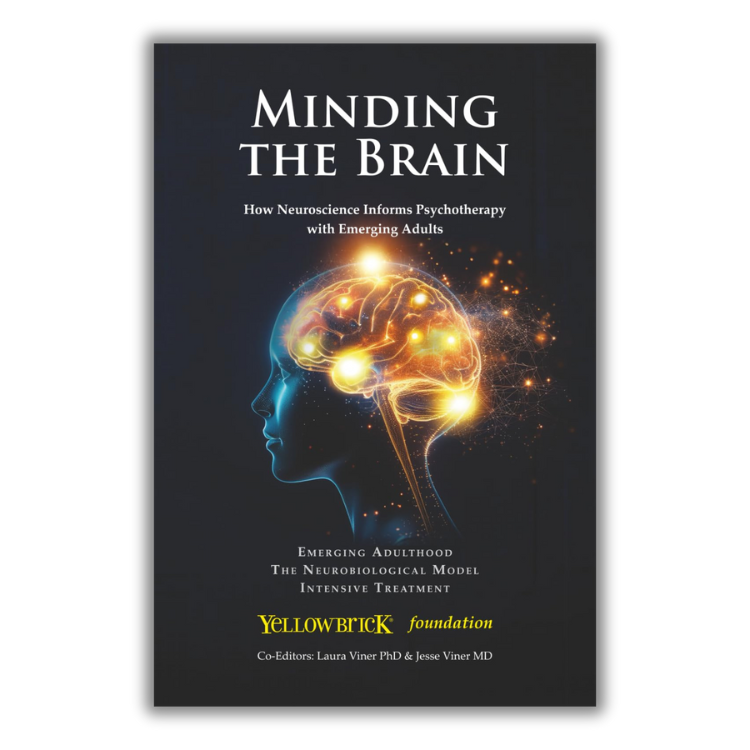
10.) Minding the Brain — Yellowbrick Foundation:
Emerging adulthood is one of the most misunderstood and under-addressed stages of development in mental health care. In Minding the Brain: How Neuroscience Informs Psychotherapy with Emerging Adults—co-edited by Yellowbrick Foundation CEO Jesse Viner and Director of Research Laura Viner—gather leading experts to demonstrate how neuroscience, developmental psychology, and trauma-informed practice can shape outcomes during this pivotal life stage. Blending theory, clinical insight, and case studies, the book offers a groundbreaking framework for helping young adults cultivate resilience, independence, and integration. In the book’s introduction, Laura Viner writes:
Generations of the past that finished school, got jobs, married and became parents in relatively quick sequence in their early twenties are unlikely to see this pattern reflected in the new way of becoming adult. The developmental norm is to spend time exploring one’s possibilities before making commitments to roles and responsibilities that will come to define one’s adult life. As we refine theory and accumulate empirical research on emerging adulthood, we will move closer to knowing how to best support and facilitate development during these years.
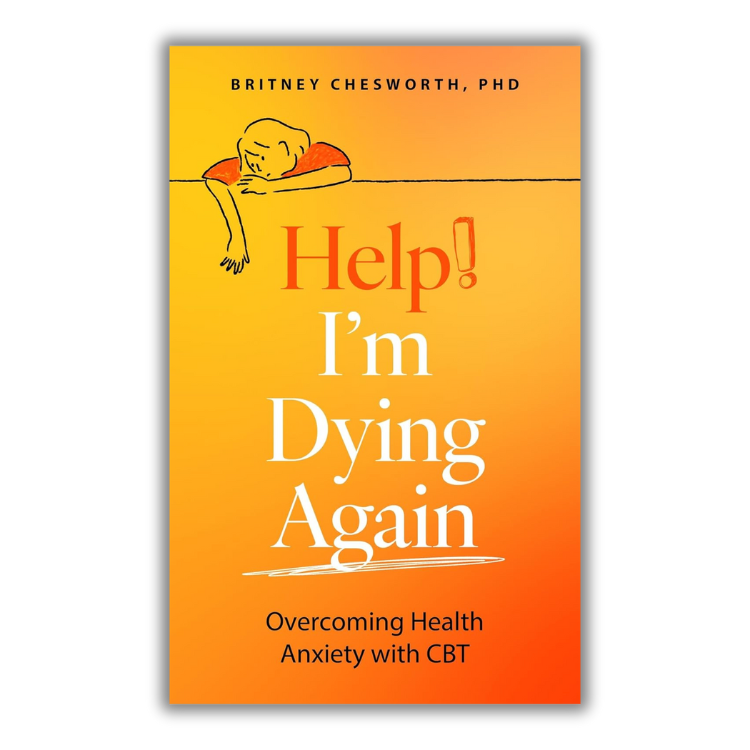
9.) Help, I’m Dying Again — Brittney Chesworth:
In an era when medical information—and misinformation—is only a click away, health anxiety has become one of the most prevalent mental health challenges of modern life. In Help, I’m Dying Again: Overcoming Health Anxiety with Cognitive Behavioral Therapy (CBT), Dr. Brittney Chesworth combines her clinical expertise with her own lived experience to deliver a compassionate and practical roadmap for recovery. Through clear lessons, vivid anecdotes, and evidence-based strategies, she empowers readers to break free from fear-driven patterns and cultivate clarity, resilience, and lasting calm. Chesworth writes:
Remember that it likely took you years to strengthen your unhelpful beliefs and become dependent on problematic behaviors. It will take time to change all of this too and that is okay. You will still have good and bad days, weeks, months. Change is not always linear. Give yourself some grace when you find yourself slipping into thinking and behavior that aren’t helpful. At the same time, hold yourself accountable to continue putting in the work. You can improve your health anxiety over time through making small, intentional and consistent changes in your thoughts and behaviors each day.

8.) How to Make Your Brain Your Best Friend — Rachel Barr:
In an era when mental health struggles touch nearly everyone, How to Make Your Brain Your Best Friend: A Neuroscientist’s Guide to a Healthier, Happier Life arrives as both a scientific guide to understanding the mind and a compassionate invitation to care for it more wisely. Neuroscientist Rachel Barr demystifies the brain’s complexity, showing how its constant flux and neuroplastic power can create new pathways for habits, skills, and emotional well-being. Both rigorous and warmly relatable, the book empowers readers to nourish their minds while unlocking the brain’s extraordinary capacity for adaptability and growth. In a recent Instagram video related to the book’s release, Barr said:
We’ve no reason to believe that self-optimization, ‘hacking your brain’ actually brings you any closer to feeling happy and fulfilled. Quite the reverse we see it happening all around us, people are struggling because in chasing this mirage, we’re missing out on what actually does make life meaningful, happy. Your brain is not machined to be hacked. It is a living breathing entity. The question then becomes not: ‘How can I hack my brain into submission?’ But how do you make your brain your best friend?
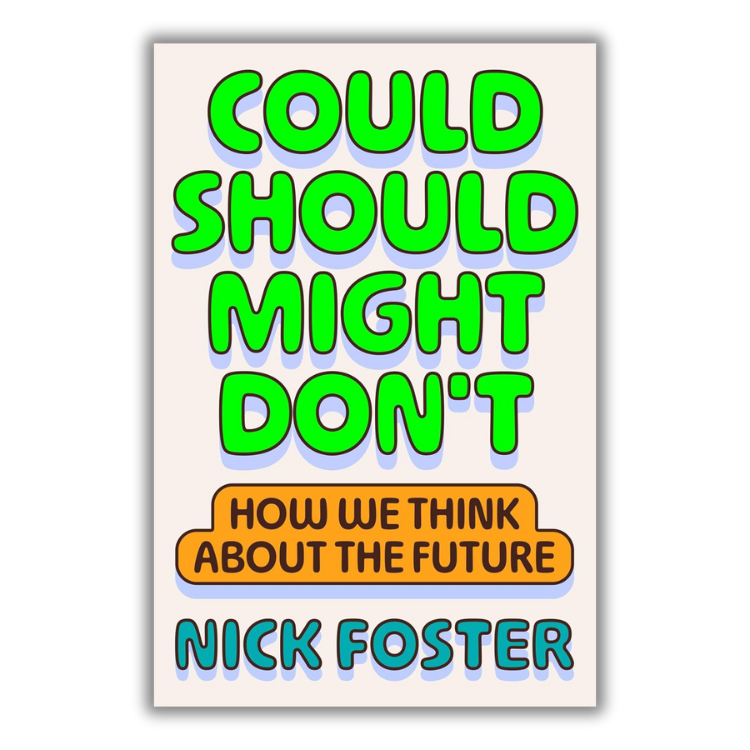
7.) Could Should Might Don’t — Nick Foster:
The future isn’t something to be forecasted—it’s something to be thought through. In Could Should Might Don’t: How We Think About the Future, Nick Foster, a leading voice in futures design, draws on decades of work with companies like Google X, Dyson, and Sony to unpack the ways humans imagine what comes next. By illuminating the “could,” “should,” “might,” and “don’t” mindsets, he offers both a critique of lazy futurism and a hopeful invitation to approach possibility with wisdom, creativity, and purpose. Foster writes:
How could we rethink the world so that a bias toward the future feels not only enticing but essential? How can we make the development of a well-defined perspective on the future feel as commercially important as sales, partnerships, investments, and returns? How can we find ways for companies, governments, and society at large to feel motivated to meaningfully invest in this kind of work, and then act upon it? It feels as if a key factor in getting to that point is to aim for a significant increase in the quality of our thinking about the future. If futurism continues to feel clichéd, unrealistic, escapist, self-assured, preachy, vacuous, and generally subpar, it’s unlikely that this kind of work will ever attract those in power, but if its output improves, perhaps its audience will grow and the conversation will get richer.
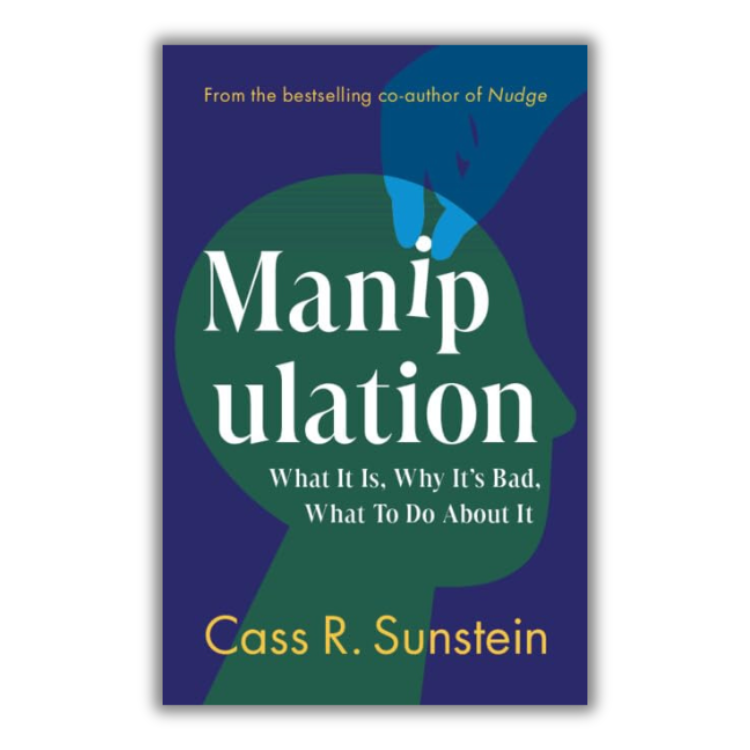
6.) Manipulation — Cass R. Sunstein:
Deceptive exploitation is as old as human interaction, but in the digital age it has reached new levels of sophistication. In Manipulation: What It Is, Why It’s Bad, What to Do About It, Harvard professor Cass R. Sunstein examines the blurred line between acceptable persuasion and coercive influence, particularly in the age of AI, deepfakes, and digital marketing. With clarity and precision, he delivers both a diagnosis and a call to action, urging readers, policymakers, and institutions to safeguard autonomy in an era of hidden influence. Sunstein writes:
As we shall see, manipulation is often (not always) a kind of trickery; it treats people as tools or fools, and as objects rather than subjects. If we keep that point in mind, we will have a good sense of what manipulation is, and why it is wrong. As we shall see, it is wrong for many of the same reasons that coercion is wrong. It is not worse than coercion, but it is bad in a different way. It is more insidious. Manipulators do not treat people with respect. They make it harder for people to make reasoned choices about how to live their lives.
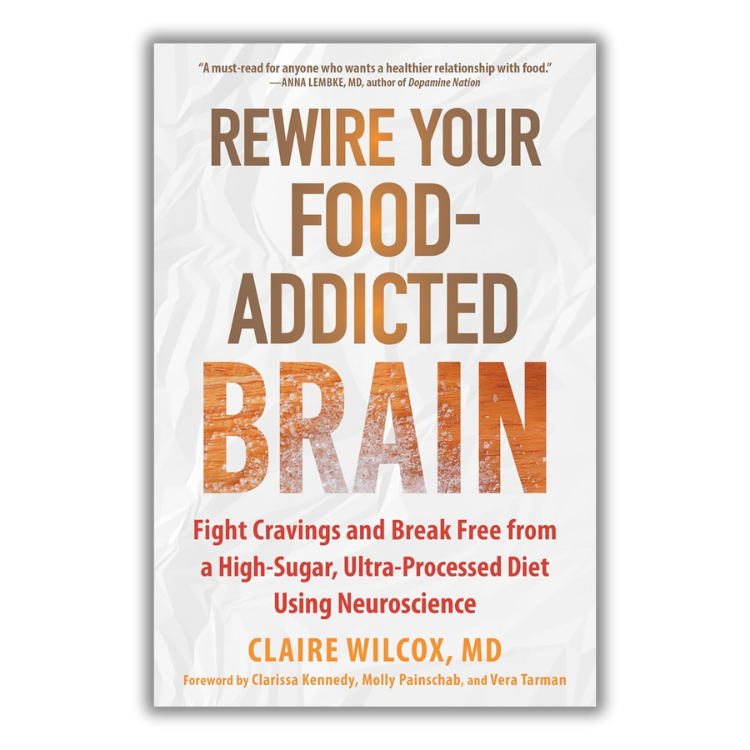
5.) Rewire Your Food-Addicted Brain — Claire Wilcox:
In a culture awash with ultra-processed foods and rising rates of obesity, diabetes, and binge eating, psychiatrist and researcher Claire Wilcox’s Rewire Your Food-Addicted Brain: Fight Cravings and Break Free from a High-Sugar, Ultra-Processed Diet Using Neuroscience feels both urgent and essential. Drawing on the latest neuroscience, decades of clinical experience, and compelling patient stories, Wilcox reveals how the food industry exploits brain chemistry to keep us hooked—and how those same insights can be harnessed to foster recovery. More than a diagnosis, Rewire Your Food-Addicted Brain provides a compassionate roadmap for overcoming compulsive eating and reclaiming both health and autonomy. Wilcox writes:
What makes this book entirely unique from existing, established solutions is that it is rooted in neuroscience and addresses the problem at its source. It is not a band-aid approach. For those with food addiction, the brain circuitry that drives addictive behavior—including circuits underlying reward, motivation, impulse control, emotion regulation, and habit formation—has been rewired by sugar and ultra-processed foods. The secret to success is nurturing these circuits back to health.
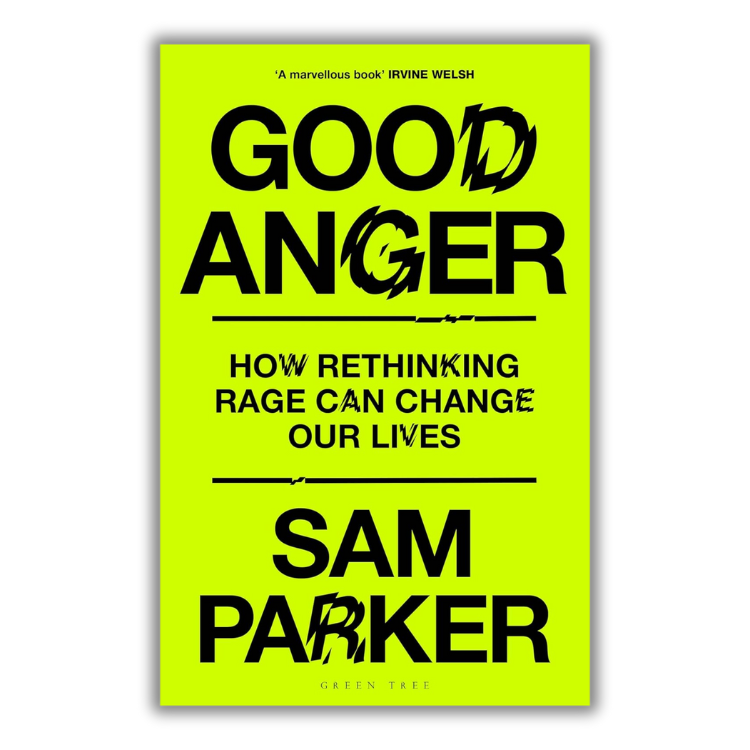
4.) Good Anger — Sam Parker:
Few emotions are as misunderstood—or as urgently in need of reappraisal—as anger, and journalist Sam Parker takes on this challenge in Good Anger: How Rethinking Rage Can Change Our Lives. Drawing from psychology, philosophy, and lived experience, Parker shows how denying or repressing anger erodes well-being, while mindfully embracing it can fuel confidence, connection, and renewal. By teaching us to channel rather than suppress this emotion, he reframes anger as a transformative force capable of fostering resilience, clarity, and purpose. Parker writes:
This book is for anyone who is curious about anger or emotions in general, but it is particularly for those who believe the phrase ‘I don’t really get angry’ applies to them. The people-pleasers, the conflict-avoiders, the rescuers, those so desperate to keep the peace they too often sacrifice their own… This is a book about trying to figure anger out. It’s full of practical insight on how to engage with this complex and powerful emotion for good, first by rethinking what it is, then by drawing on its wisdom, energy and purpose.

3.) Primal Intelligence — Angus Fletcher:
What if the mental edge that made Shakespeare, Curie, and Jobs extraordinary could be cultivated in all of us? In Primal Intelligence: You Are Smarter Than You Know, Ohio State professor Angus Fletcher presents a groundbreaking neuroscientific framework that identifies intuition, imagination, and common sense as the foundations of human genius. Drawing on military training, classroom applications, and history’s most revolutionary achievements, Fletcher reveals how this hidden intelligence provides a uniquely human advantage in a world increasingly defined by AI. He writes:
As our ancestors self-reflected, using their intelligence to examine itself, they parsed it into four primal powers: intuition, imagination, emotion, and commonsense. Intuition perceives the world’s hidden rules. Imagination makes the future. Emotion knows the path of personal growth. Commonsense decides wisely in uncertainty… My theory is that intuition, commonsense, and the rest of Primal Intelligence are driven by narrative cognition. Or to put it in regular speak: The human brain is real-life smart because it thinks in story.
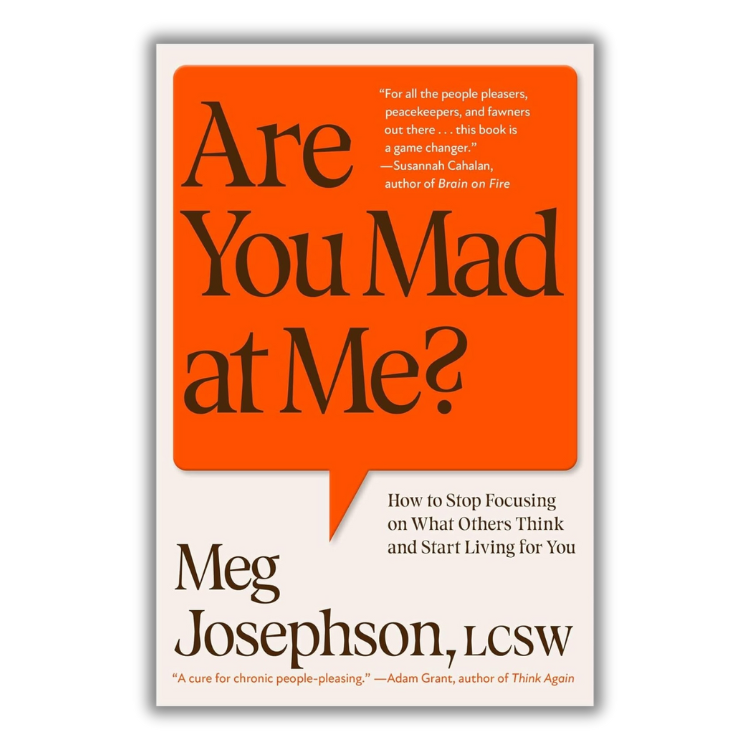
2.) Are You Mad at Me? — Meg Josephson:
In a world where anxiety and self-doubt play on repeat in the minds of many, Are You Mad at Me?: How to Stop Focusing on What Others Think and Start Living for You offers both psychological insight and practical tools for breaking free from the cycle. With clarity and warmth, psychotherapist Meg Josephson reframes people-pleasing as an outdated behavioral pattern—known as the “fawn response”—revealing how early coping strategies can harden into approval-seeking habits that erode authenticity and joy. Combining clinical expertise with heartfelt storytelling and actionable exercises, this instant New York Times bestseller empowers readers to recognize these patterns and replace them with healthier ways of relating that cultivate both self-respect and deeper connection. Josephson writes:
Are You Mad at Me? is about holding ourselves with the degree of compassion that we’ve always wanted but thought we didn’t deserve. It’s about shedding the protective mechanisms that are keeping us stuck in the past and away from the present. It’s about releasing the belief that we need to neglect ourselves for the comfort of other people. It’s about removing the conditioning and the blockages that have disconnected us from the true essence of who we are and what we want in life. It’s about cultivating a sense of internal safety so that when everything else seems to be chaotic and out of our control, we have a quiet place to come back to.
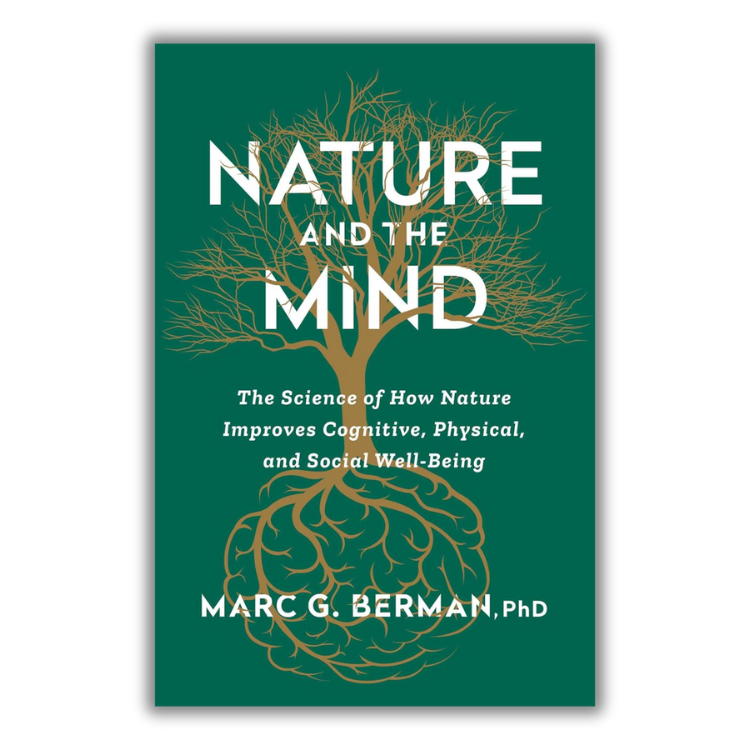
1.) Nature and the Mind — Marc G. Berman:
The outdoors are more than a backdrop to our lives—they are a profound force that shapes our psychological well-being, relationships, and communities. In Nature and the Mind: The Science of How Nature Improves Cognitive, Physical, and Social Well-Being, environmental neuroscience pioneer Marc Berman distills decades of research to show how spending time in the natural world—from leafy parks to rivers and coastlines—enhances attention, elevates mood, reduces disease, and fosters empathy. At its core, Nature and the Mind is both a landmark work in environmental neuroscience and an accessible guide for integrating nature’s healing power into modern life. Berman writes:
This is a book about why nature matters so much to us, and how our interactions with nature can tell us more about our own psychology—and even how our brains work… Environmental neuroscience has led me to grand visions of saving society with a worldwide nature revolution, but like every vast transformation, this one can start very small, with each of us: Just add a little green and experience the benefit in action.
The Best Books for Personal Growth Published in 2025
If you’re interested in exploring other recently released inspirational books, across a variety of different genres related to personal growth, we invite you to check out our other articles showcasing some of the best to be published in 2025:
January’s Best Books:
- 5 Illuminating Spirituality Books Released in January 2025
- 5 Compelling Psychology Books Released in January 2025
- 5 Transformative Self-Help Books Released in January 2025
- 5 Insightful Buddhist Books Released in January 2025
February’s Best Books:
- 5 Illuminating Spirituality Books Released in February 2025
- 5 Compelling Psychology Books Released in February 2025
- 5 Transformative Self-Help Books Released in February 2025
- 5 Insightful Buddhist Books Released in February 2025
- 5 Noteworthy Communication & Relationship Books Released in February 2025
March’s Best Books:
- 5 Illuminating Spirituality Books Released in March 2025
- 5 Compelling Psychology Books Released in March 2025
- 10 Transformative Self-Help Books Released in March 2025
- 5 Insightful Buddhist Books Released in March 2025
April’s Best Books:
- 8 Illuminating Spirituality Books Released in April 2025
- 6 Compelling Psychology Books Released in April 2025
- 10 Transformative Self-Help Books Released in April 2025
- 7 Insightful Buddhist Books Released in April 2025
May’s Best Books:
- 10 Illuminating Spirituality Books Released in May 2025
- 10 Compelling Psychology Books Released in May 2025
- 20 Transformative Self-Help Books Released in May 2025
- 5 Insightful Buddhist Books Released in May 2025
- 5 Enlightening Mindfulness and Meditation Books Released in May 2025
June’s Best Books:
- 10 Illuminating Spirituality Books Released in June 2025
- 10 Compelling Psychology Books Released in June 2025
- 10 Transformative Self-Help Books Released in June 2025
- 5 Insightful Buddhism Books Released in June 2025
- 5 Enlightening Mindfulness and Meditation Books Released in June 2025
July’s Best Books:
- 10 Illuminating Spirituality Books Released in July 2025
- 10 Compelling Psychology Books Released in July 2025
- 10 Transformative Self-Help Books Released in July 2025
- 5 Insightful Buddhism Books Released in July 2025
- 5 Enlightening Mindfulness and Meditation Books Released in July 2025
August’s Best Books:
- 10 Illuminating Spirituality Books Released in August 2025
- 10 Compelling Psychology Books Released in August 2025
- 10 Transformative Self-Help Books Released in August 2025
- 5 Insightful Buddhism Books Released in August 2025
- 5 Enlightening Mindfulness and Meditation Books Released in August 2025
September’s Best Books:
- 10 Illuminating Spirituality Books Released in September 2025
- 10 Compelling Psychology Books Released in September 2025
- 10 Transformative Self-Help Books Released in September 2025
- 5 Insightful Buddhism Books Released in September 2025
- 5 Enlightening Mindfulness and Meditation Books Released in September 2025
October’s Best Books:
- 10 Illuminating Spirituality Books Released in October 2025
- 10 Compelling Psychology Books Released in October 2025
- 10 Transformative Self-Help Books Released in October 2025
- 6 Insightful Buddhism Books Released in October 2025
- 5 Enlightening Mindfulness and Meditation Books Released in October 2025
November’s Best Books:
- 10 Illuminating Spirituality Books Released in November 2025
- 10 Compelling Psychology Books Released in November 2025
- 10 Transformative Self-Help Books Released in November 2025
- 5 Insightful Buddhism Books Released in November 2025
- 5 Enlightening Mindfulness and Meditation Books Released in November 2025
December’s Best Books:
- 10 Illuminating Spirituality Books Released in December 2025
- 10 Compelling Psychology Books Released in December 2025
- 10 Transformative Self-Help Books Released in December 2025
- 5 Insightful Buddhism Books Released in December 2025
- 5 Enlightening Mindfulness and Meditation Books Released in December 2025
Affiliate Link Disclosure: Balanced Achievement earns a commission when any of the books featured on our site are purchased directly through Amazon product links.

