

 Patrick Zeis
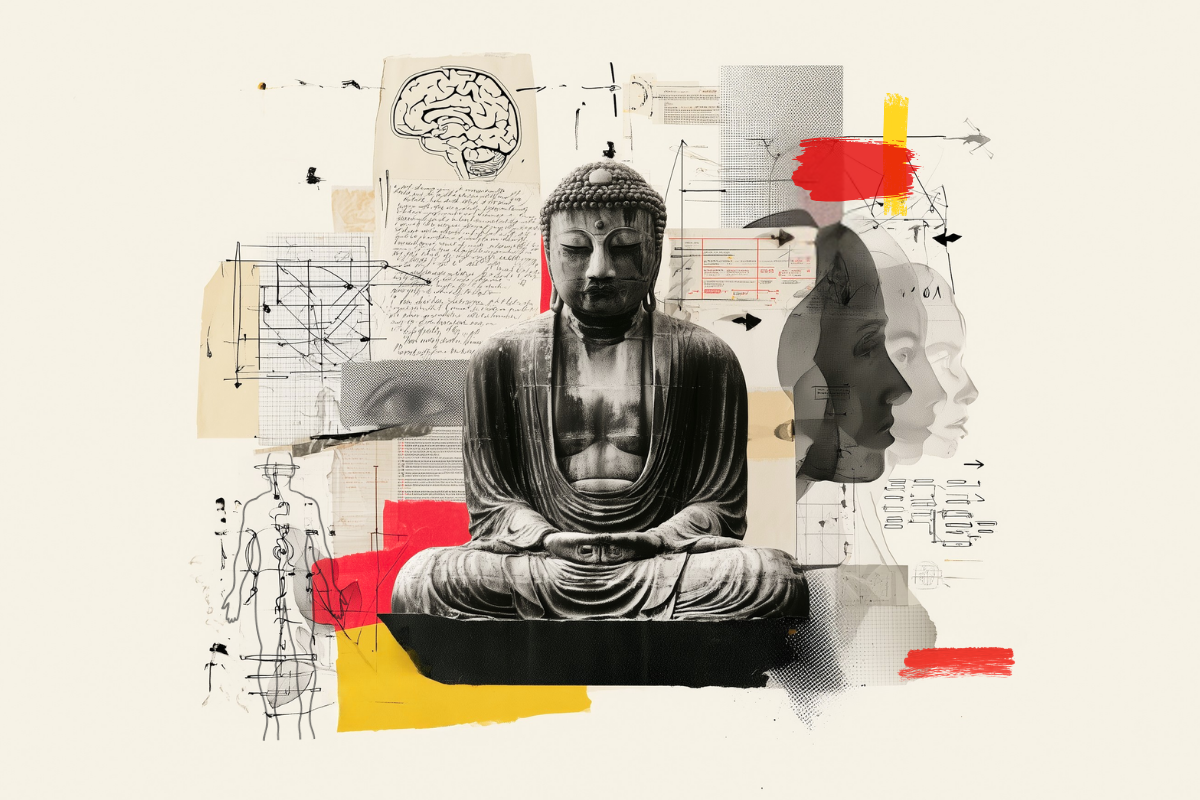
The Buddha had no laboratory, clinical license, brain scanner, or randomized controlled trials. Psychology would not become a scientific discipline for more than two thousand years. Nevertheless, he developed a remarkably systematic account of why people suffer, how perception and desire shape experience, why habits become entrenched, how identity is constructed, and how mental patterns can change.
Was the Buddha therefore a psychologist? Not by profession or scientific method. He was a spiritual teacher whose ultimate concern was liberation from suffering and rebirth. Yet the early Buddhist discourses contain recognizable theories of conditioning, motivation, attention, emotional reactivity, habit, and mental cultivation. They do not merely describe suffering; they identify the processes that sustain it and prescribe practices intended to interrupt them.
Modern psychology has reached many related conclusions through very different methods. Behaviorism demonstrated that reactions are conditioned by associations and consequences. Cognitive psychology showed how interpretation constructs emotional experience. Contemporary therapies teach people to observe thoughts without automatically believing or obeying them. Neuroscience has confirmed that repeated mental activity can change how the brain functions.
These correspondences are not exact, and modern psychology has not simply proven Buddhism. It has formalized, tested, and clinically applied processes that Buddhist teachings described through disciplined observation centuries earlier. The Buddha was not a psychologist in the modern institutional sense, but he was unmistakably a psychological theorist and practitioner—and one of history’s most consequential investigators of the human mind.
Why the Buddha Is Viewed Through a Psychological Lens

The psychological reading of Buddhism begins with the structure of the Buddha’s teaching. He treated suffering as a condition with identifiable causes, argued that changing those causes would change the resulting experience, and organized conduct, attention, reflection, and meditation into a practical program of transformation.
Suffering as the Presenting Problem:
The Buddha’s investigation began with a recognizable problem: human beings experience illness, aging, death, grief, frustration, conflict, and separation from what they love. Even favorable conditions remain unstable and therefore cannot guarantee permanent security.
The Pāli word dukkha is commonly translated as “suffering,” but it also includes the unsatisfactoriness created by change. A pleasant situation may be genuinely pleasant while remaining vulnerable to loss. The problem intensifies when the mind demands that it remain unchanged. Pleasure becomes anxiety when someone fears its disappearance; achievement becomes insecurity when self-worth depends upon continued success; love becomes possessiveness when another person is expected to provide protection from loneliness and change.
This resembles a clinician’s presenting problem. Something hurts, repeatedly goes wrong, or prevents a person from living freely. Rather than treating suffering as proof of a defective self, the Buddha asks how it works: Which conditions produce it? Which reactions maintain it? What pain is unavoidable, and what does the mind add through craving, interpretation, and identification?
The traditional Buddhist goal extends beyond symptom relief, but the starting point is psychologically familiar. A person recognizes a recurring pattern of suffering and begins investigating the processes that keep it alive.
The Buddha’s Journey as Psychological Inquiry:
The Buddha’s life story follows a strikingly research-like trajectory. He identified a problem, studied established authorities, tested their methods, rejected approaches that failed, and continued investigating until he believed he had found both the causes of suffering and a path to their cessation.
According to the Ariyapariyesanā Sutta, he mastered the meditative attainments taught by respected teachers but concluded that even these refined states did not provide the freedom he sought. He then tested extreme asceticism, restricting food and enduring physical pain to the point of collapse. The Mahāsaccaka Sutta records his decisive conclusion: self-mortification produced agony, not liberating knowledge. He abandoned it.
He then investigated experience directly, examining attention, feeling, craving, perception, intention, and changing states of mind. From this inquiry came causal models such as dependent arising, analyses such as the five aggregates, and a structured system of ethical, contemplative, and psychological development known as the Noble Eightfold Path. He taught others to apply these methods and determine whether the promised changes followed.
This was not modern experimental science. The Buddha’s evidence was contemplative and interpersonal, and his conclusions belonged to an ancient religious worldview that included karma and rebirth. The resemblance lies in the trajectory: identify a problem, test available methods, discard ineffective ones, develop a causal explanation, and create an intervention others can practice.
The Four Noble Truths as a Diagnostic Framework:
The Four Noble Truths express this structure most clearly. They are often presented as beliefs, but each is paired with a task: suffering is to be understood, its origin abandoned, its cessation realized, and the path cultivated.
Viewed psychologically, they form a diagnostic and therapeutic sequence:
1. Identify the condition: What is the suffering, and how is it experienced?
2. Determine its causes: Which processes create and maintain it?
3. Establish that change is possible: What happens when those causes cease?
4. Cultivate an intervention: Which practices weaken the causes and develop another response?
The First Noble Truth identifies dukkha. The Second locates its central cause in taṇhā, the craving for gratification, continued identity, or escape. The Third asserts that suffering is not unalterable: when craving ceases, release is possible. The Fourth prescribes the Noble Eightfold Path.
The comparison is especially strong because suffering is not located in an immutable defect. Craving, hostility, habit, and identification arise through conditions; because they are conditioned, changing their supports can change what follows. The Four Noble Truths are not a clinical protocol in ancient language, but their organization around diagnosis, cause, prognosis, and treatment explains why psychologists repeatedly find the framework familiar.
A Psychology Aimed at Liberation:
One difference defines the boundary of every comparison that follows. Modern psychology generally seeks reduced distress, healthier relationships, effective functioning, and meaningful living within a person’s present lifetime. The Buddha sought the complete ending of the ignorance and craving through which suffering and renewed existence continue. The traditional goal is nibbāna: liberation from craving and rebirth.
This changes the meaning of practices modern psychology often adopts. Mindfulness is not merely stress management; it supports insight into impermanence, suffering, and not-self. Compassion is part of an ethical transformation, not only a way to improve mood or relationships. Equanimity does more than regulate emotion; it weakens the attempt to build identity and security around pleasure and pain.
The difference in purpose does not erase the psychological overlap. It places it correctly. The Buddha developed a psychology in the service of liberation; modern psychology often applies parts of that system to more limited forms of suffering. The clearest correspondences concern the mechanisms both investigate—conditioning, cognition, avoidance, craving, identity, and the possibility of mental change.
The Buddha and Learning Theory — How Reactions Become Conditioned

Learning theory studies how experience changes later behavior. Buddhist teaching uses another vocabulary but repeatedly describes the mind as shaped by what it encounters, pursues, resists, and rehearses. Reactions that feel inherent to the present may reflect earlier learning; what is reinforced becomes more likely, and what is repeatedly practiced becomes an inclination.
Classical Conditioning and Latent Tendencies:
In classical conditioning, a cue acquires emotional significance through association. A notification sound may produce tension after repeatedly accompanying hostile messages. A room may evoke fear because panic occurred there. The response seems to belong to the object, but part of its meaning comes from the person’s history.
Early Buddhism describes a comparable conditionality. Contact gives rise to a pleasant, painful, or neutral feeling, which can activate latent tendencies toward craving, aversion, and confusion. The Pāli term anusaya refers to tendencies that may remain quiet until suitable conditions bring them into expression. Someone may feel composed while being praised and discover a strong disposition toward anger only when contradicted.
The Sallatha Sutta connects these tendencies with feeling. Resisting pain activates aversion; compulsively seeking relief through pleasure feeds craving. This is not identical to a laboratory theory of conditioned association, but the shared insight is important: a reaction that appears inherent to an object may actually express a history of conditioning.
Once the response is understood as a process, the cue, feeling, prediction, and impulse can be distinguished. What was learned need not be treated as inevitable.
Operant Conditioning, Karma, and Reinforced Behavior:
Operant conditioning examines how consequences shape action. Behavior followed by reward becomes more likely; behavior that removes discomfort can be strengthened through negative reinforcement even when it causes larger problems.
Avoidance makes the cycle visible. Someone postpones opening an anxiety-provoking email, and their anxiety falls. That immediate relief reinforces postponement, making the same response more likely the next time. Buddhist teachings describe a comparable sequence: unpleasant feeling provokes escape, pleasant feeling provokes continuation, and the short-term result strengthens the strategy that produced it.
Buddhism places this process within kamma, whose psychological starting point is intention. “It is intention that I call karma,” the Buddha says in the Nibbedhika Sutta. An angry reply may provide immediate discharge while making hostility more available later. A lie may remove a threat while increasing the need for concealment. Patience and generosity can likewise become more accessible through repetition.
Karma is not another name for reinforcement: it adds ethics, intention, responsibility, and traditionally consequences beyond one lifetime. Yet both models recognize that actions do not leave the actor unchanged. What brings immediate reward can cultivate a disposition that later restricts freedom.
Habit Formation and Sankhara:
Contemporary research describes habits as responses that become increasingly controlled by contextual cues rather than deliberate choice. Someone opens an app without deciding to or responds defensively before considering what was said. The behavior may continue after the person’s goals change because the context itself has become sufficient to trigger it.
The Buddha placed similar importance on repetition. In the Dvedhāvitakka Sutta, he says that whatever a person frequently thinks about becomes the mind’s inclination. Rehearsing grievance makes resentment easier to sustain; repeatedly interpreting ambiguity as rejection strengthens defensiveness. Practicing attention, generosity, and restraint develops different defaults.
The term saṅkhāra can refer to volitional activities, mental formations, or conditioned constructions; it is not an exact synonym for “habit.” The crossover lies in formation. Thoughts and actions help construct the conditions from which later responses arise.
Buddhist practice therefore does more than reveal habits. It deliberately builds alternatives. Mindfulness is strengthened by repeatedly remembering to observe, compassion by returning to concern rather than hostility, and restraint by declining to rehearse an impulse. Modern psychology calls this learned automaticity; Buddhism calls it cultivation. Both recognize that the mind becomes inclined toward what it repeatedly does.
Exposure Learning and the Second Arrow:
Avoidance preserves conditioned fear. Anxiety appears, escape brings relief, and relief teaches the person that escape was necessary. Exposure therapy interrupts the cycle by allowing contact with a feared cue without the usual avoidance. Contemporary models understand this as new learning: discomfort can be tolerated, catastrophe may not occur, and another response is available ([Bouton, 2004]()).
The Buddha’s teaching of the two arrows identifies a similar opening. In the Sallatha Sutta, physical pain is the first arrow. The resistance, fear, confusion, and compulsive escape that gather around it become the second. A trained person still experiences the first arrow but does not automatically turn it into catastrophic prediction, resentment, or self-condemnation.
Consider the first sensations of anxiety: a tightening chest and accelerated heartbeat. If they are immediately interpreted as dangerous, monitoring and fear intensify them, apparently confirming the prediction. Remaining with the sensations without obeying every alarm allows different learning: discomfort changes, predictions are not events, and action remains possible while anxiety is present.
The sutta is not an ancient exposure manual, but it identifies the same emotional-learning problem. When pain is repeatedly followed by resistance and escape, those responses gain strength. When it is met with awareness without reinforcing the old reaction, another way of responding can be learned. The Buddha distinguished an initial experience from the conditioned suffering surrounding it—and located freedom in changing what happens next.
The Buddha and Cognitive Psychology — How the Mind Constructs Experience

Learning theory explains how reactions acquire strength; cognitive psychology asks how the mind interprets what it encounters. Attention selects, perception organizes, memory supplies earlier patterns, and beliefs shape expectations. People respond not only to events, but to the meanings constructed around them.
Buddhist teachings analyze experience in a similar way. Contact passes through feeling, perception, and thought before expanding into concepts charged by craving and identity. The claim is not that nothing exists outside the mind, but that the world as psychologically experienced is partly shaped by mental activity.
Cognitive Appraisal and the Feeling–Perception–Thought Sequence:
Cognitive appraisal theories begin with the observation that one event can produce different emotions. Rain during a wedding may feel disastrous to the couple, welcome to a farmer, and irrelevant to someone indoors. Its significance depends upon goals, expectations, memories, and perceived ability to cope. Richard Lazarus made this evaluation central to emotion: an encounter interpreted as danger evokes a different response from the same demand interpreted as manageable.
The Buddha described a related sequence in the Madhupiṇḍika Sutta:
Contact → feeling tone → perception → thought → mental proliferation
Contact gives rise to vedanā, the basic tone of pleasantness, painfulness, or neutrality. What is felt is perceived or recognized; what is perceived becomes material for thought; and thought can proliferate into memories, comparisons, and imagined possibilities.
A critical message at work illustrates the sequence. Words are read, unpleasant feeling arises, and perception identifies disapproval. Thought interprets what it means. Proliferation links the message to earlier failures, possible dismissal, financial insecurity, and personal worth. By the time the person reacts, they are responding to the message, remembered humiliation, anticipated consequences, and an identity under threat.
The Buddhist sequence is not identical to modern appraisal theory: vedanā is not a fully developed emotion, and contemporary models distinguish several conscious and nonconscious evaluations. The deeper agreement is that experience develops through stages of interpretation rather than arriving complete. The event may be fixed, but its elaboration is not. Feeling can be recognized before it becomes craving, and thought can be observed before it recruits every related fear.
Cognitive Schemas and Conditioned Interpretation:
A schema is an organized structure of knowledge that helps the mind interpret new information. Schemas make perception efficient, but they can also bias it. Someone expecting rejection may readily notice an unanswered message or distracted expression while overlooking signs of care.
Aaron Beck’s cognitive theory made such patterns central to depression. Stress can activate schemas involving failure, loss, or worthlessness, which then bias attention and generate automatic thoughts. What the person notices appears to prove the schema correct, creating a self-reinforcing system.
Buddhism has no single equivalent of a schema, but several concepts describe similar functions. Perception (saññā) recognizes and labels; views (diṭṭhi) organize beliefs; latent tendencies (anusaya) dispose the mind toward familiar reactions; and formations (saṅkhāra) shape the activity from which later experience develops.
Together they describe a mind already prepared to find particular meanings. Jealousy, for example, does not begin from a neutral survey. Attention selects possible threats, perception identifies rivals, memory retrieves earlier injuries, and thought arranges them into a story of betrayal. The story may contain real evidence, yet its apparent completeness depends upon an established pattern.
Both cognitive therapy and Buddhist practice therefore treat interpretation as conditioned and trainable. Therapy examines automatic conclusions and develops more flexible schemas; Buddhist practice investigates the perceptions, views, and tendencies through which experience is constructed. The shared premise is that the first interpretation to arise is not reality itself. It is often a practiced way of organizing it.
Mental Proliferation and Automatic Thinking:
Few Buddhist ideas correspond as vividly with cognitive psychology as papañca, or mental proliferation: the expansion through which a simple encounter becomes a network of interpretations, memories, comparisons, and personal concerns.
A supervisor writes, “Can we talk tomorrow?” Nothing more has occurred. Within minutes, the employee imagines criticism, dismissal, financial crisis, and humiliation. Earlier mistakes become evidence, and the body responds to possibilities as though they were present events. A brief message has become a threat to employment, identity, and future security.
Modern psychology describes parts of this process as automatic thoughts, rumination, worry, catastrophizing, and interpretation bias. Papañca offers a broader image of conceptual activity overtaking experience. The Madhupiṇḍika Sutta describes a person eventually besieged by the perceptions and concepts produced through proliferation: thought begins as an activity and becomes an environment in which the thinker feels trapped.
Proliferation often revolves around craving, comparison, and identity: What must I obtain? How do I rank? What does this prove about me? It also creates apparent evidence for itself. Imagining disaster produces real anxiety; anxiety makes the imagined outcome feel credible; attention then searches for confirming signs.
Mindfulness makes the additions visible. There is a message, an unpleasant feeling, and uncertainty—and then there are thoughts about inadequacy and ruin. This resembles cognitive therapy’s recognition that a thought is an interpretation rather than a transparent report of reality. Buddhism adds a further question: What craving or identity makes this story so compelling? Freedom comes not from ending thought, but from seeing how thought acquires control.
Dependent Origination and Cognitive-Behavioral Feedback Loops:
The familiar Cognitive Behavioral Therapy (CBT) triangle connects thoughts, emotions, and behavior; fuller versions include the body and environment. Its point is reciprocal causation. A belief that social mistakes lead to rejection produces anxiety and self-monitoring. The person speaks less and leaves early, others engage less, and their response is interpreted as confirmation of rejection.
No one element explains the pattern. Thought affects emotion, bodily arousal influences interpretation, behavior changes the environment, and the environment feeds back into belief. Therapy can intervene at several points by examining the prediction, redirecting attention, changing behavior, or remaining in the situation longer.
Dependent origination (paṭiccasamuppāda) is much larger. Its traditional sequence links ignorance, formations, consciousness, contact, feeling, craving, grasping, becoming, birth, and suffering . It explains the perpetuation of suffering and rebirth, not merely a short-term clinical feedback loop.
Yet both reject single-cause explanations. Feeling does not guarantee craving, but provides a condition for it; craving supports grasping; grasping organizes behavior and identity; those patterns help recreate similar situations. This shifts the question from “What is wrong with me?” to “What conditions keep this pattern alive?” Mindfulness may expose feeling before craving forms, reflection may weaken an angry interpretation, and changed behavior may alter an environment that reinforces a painful belief.
Dependent origination should not be reduced to the CBT triangle. Their scopes differ profoundly. Their shared psychological logic is nevertheless liberating: a pattern exists because conditions repeatedly assemble it. Change the conditions, and what follows can also change.
Attentional Bias and Wise Attention:
Attention determines which parts of an information-rich environment become prominent. Its selection is shaped by emotion and learning. Someone anxious about disapproval notices the one skeptical face in a receptive audience; someone experiencing craving repeatedly detects cues related to the desired object. Attention makes a concern feel omnipresent by continually collecting evidence for it.
Research on attentional bias established that anxiety can involve preferential processing of threat, although the measurement and reliability of particular tasks remain debated. The broader point stands: attention is not a neutral spotlight.
Buddhism distinguishes wise attention (yoniso manasikāra) from unwise attention. Unwise attention feeds craving, hostility, confusion, and speculative self-concern. Wise attention investigates conditions, consequences, impermanence, and release. The Sabbāsava Sutta connects these modes of attending with whether underlying defilements grow or are abandoned.
Wise attention is more than concentration. A person can concentrate intensely on an insult or fear. The relevant question is what attention makes important and what it teaches the mind to repeat. In envy, attention continually enlarges another person’s advantages and one’s own deficiencies. Wise attention recognizes the comparison, examines its consequences, and redirects the mind toward goodwill or constructive action.
This makes mindfulness more active than simply “being present.” It detects where attention has gone; wise attention reveals what that selection is producing; right effort supports another direction. A threat can be acknowledged without becoming the whole of reality, and a desire can be felt without allowing every associated cue to organize behavior.
The Buddha and Third-Wave Therapies — Changing the Relationship to Experience

Third-wave therapies retain an interest in thought while emphasizing context, acceptance, mindfulness, values, compassion, and the person’s relationship with inner experience. Their shared premise sounds distinctly Buddhist: freedom does not always require eliminating an unwanted thought or feeling. It may require experiencing it without automatically organizing behavior around it.
Some connections, especially in mindfulness-based treatment, reflect direct historical influence. Others developed through behavioral, cognitive, evolutionary, or attachment research. Across both routes, the target shifts from mental content alone to the avoidance, grasping, and identification that give it control.
ACT, Psychological Flexibility, and Non-clinging:
Acceptance and Commitment Therapy (ACT) cultivates psychological flexibility: openness to experience, contact with the present, and action guided by values rather than rigid attempts to control thought and feeling. Its model integrates acceptance, cognitive defusion, present-moment awareness, self-as-context, values, and committed action.
Acceptance means making room for experience when efforts to eliminate it would narrow life further. Cognitive defusion weakens literal attachment to thought. “I cannot handle this” becomes a sentence the mind is producing, not an instruction that must be obeyed.
This resembles Buddhist mindfulness and non-clinging. A thought or feeling is recognized as something that arose through conditions without being made “mine,” “what I am,” or the owner of the whole person. In both approaches, this openness enables action. Someone who fears applying for desired work can notice “I will embarrass myself,” allow the anxiety, reconnect with the value of meaningful work, and apply while uncertainty remains.
ACT arose from behavioral science, not as a restatement of Buddhism. Its values are personally chosen, whereas Buddhism supplies a more explicit ethical framework. ACT’s self-as-context also differs from a doctrine that refuses to make even the observer into an enduring self. The practical convergence remains strong: a thought can be present without becoming a command, and meaningful action need not wait for inner certainty.
MBCT and Decentering:
Mindfulness-Based Cognitive Therapy (MBCT) provides a direct historical bridge. Developed to prevent depressive relapse, it combines cognitive therapy with meditation practices adapted from Buddhist traditions and Mindfulness-Based Stress Reduction (MBSR).
For someone with recurrent depression, a small decline in mood can reactivate familiar self-criticism, hopeless prediction, and rumination. Those thoughts deepen the mood, which produces more of the same thinking. MBCT trains decentering: experiencing thoughts and feelings as temporary mental events rather than facts or definitions of self. “I am worthless” becomes “a self-critical thought has arisen.”
The shift closely resembles Buddhist non-identification. The Satipaṭṭhāna Sutta teaches recognition of body, feeling, and mind while observing their arising and disappearance. The not-self teaching warns against treating feeling, perception, formations, or consciousness as “mine,” “I,” or “my self.”
Decentering creates room before content becomes identity. A painful thought may still affect mood, but it is less able to recruit every associated memory and conclusion. Foundational research described MBCT as helping recovered patients disengage from depression-linked thinking, and later evidence has supported its use in relapse prevention for appropriate groups.
The aims differ: MBCT reduces vulnerability to depressive relapse, while Buddhist mindfulness serves a path toward the end of clinging. Yet MBCT demonstrates the underlying psychological insight clinically. People suffer not only because painful thoughts occur, but because those thoughts are experienced as reality and self. Seeing them as events changes what they can do.
Compassion-Focused Therapy and Karuna:
Compassion-Focused Therapy (CFT) and Buddhist practice share a foundational assumption: compassion is not merely a trait one possesses or lacks. It can be cultivated.
Paul Gilbert developed CFT particularly for people affected by shame and harsh self-criticism. Its evolutionary model examines threat-protection, drive-seeking, and soothing-affiliative systems. When threat dominates, mistakes and vulnerability evoke attack, submission, or escape—even when the attacker is one’s own mind.
CFT trains compassionate motivation, attention, imagery, reasoning, and behavior. Compassion is not reassurance or permission to avoid responsibility. It is the courage to notice suffering, understand its conditions, and respond effectively. After a serious mistake, self-attack may feel corrective while producing shame and paralysis. Compassion acknowledges the error and asks what repair and learning require.
The Buddhist quality karuṇā likewise responds to suffering with the wish that it be relieved. Alongside mettā, or non-hostile goodwill, it is deliberately extended beyond those who are easy to love. The Mettā Sutta describes cultivating a boundless heart toward living beings.
CFT explains this development through affect regulation, evolution, and attachment. Buddhism places it within an ethical path and joins compassion with wisdom. Both reach the same practical conclusion: repeated compassionate attention and action make care more available. Compassion is not only something the mind feels; it is something the mind can learn to do.
Emotion Regulation and Equanimity:
Modern emotion science treats regulation as more than suppressing a feeling after it appears. James Gross’s process model identifies several points of influence: choosing or modifying situations, directing attention, changing interpretation, and modulating response.
Buddhist practice likewise works throughout the sequence. Ethical conduct changes which situations and consequences arise. Sense restraint guides engagement with provocative stimuli. Wise attention changes interpretation. Mindfulness recognizes feeling before elaboration, while reflection, right effort, compassion, and equanimity shape what follows.
Equanimity, or upekkhā, is sometimes mistaken for emotional distance. It means balance without indifference: pleasure without desperate possession, pain without hatred, and responsiveness to praise or criticism without making either the measure of personal worth. It complements compassion by allowing care without the illusion of controlling every outcome.
This differs from suppression, which inhibits expression while leaving the underlying reaction intact. Equanimity changes the relationship to feeling. The emotion is allowed and understood as changing, but it does not become the sole basis of action.
Modern psychology asks whether regulation is flexible and appropriate to context. Buddhism adds an ethical question: Does it weaken or reinforce greed, hostility, and confusion? Neither approach defines maturity as permanent calm. It is the ability to meet changing experience without repeatedly surrendering freedom to the reaction it evokes.
The Buddha and the Constructed Self

Changing one’s relationship to experience raises a deeper question: Who is the person to whom thoughts and feelings appear to belong? Ordinary experience suggests a stable inner owner, but modern psychology describes identity through changing stories, implicit processes, social roles, and partly independent motivational systems.
The Buddha went further. His doctrine of anattā, or not-self, argues that no changing component of experience provides the permanent, independent, fully controlling essence people seek. A person remains conventionally real, but the imagined self behind the processes cannot be found.
Narrative Identity and Conventional Personhood:
Personality psychology increasingly understands identity as partly narrative. People construct evolving stories that connect remembered events, present concerns, and imagined futures. Dan McAdams describes narrative identity as one layer of personality that gives life unity and purpose—not a hidden substance that remains unchanged.
Narrative creates continuity by editing. Some memories become turning points, contradictions are organized into themes, and the past is interpreted from the standpoint of the present. A person does not merely remember a life; they continually compose what it means.
Buddhist analysis instead begins with the five aggregates—form, feeling, perception, formations, and consciousness. These processes support what people conventionally call a person, but each changes through conditions and none can serve as an enduring self. The later chariot simile makes the point vividly: “chariot” usefully names an arrangement of parts, but no separate chariot is found behind them. A personal name similarly designates an organized continuity without revealing an independent essence Milindapañha.
The comparison matters when a story becomes a prison. “I am the successful one,” “I am damaged,” or “I am the person everyone needs” can make contradictory experiences feel existentially threatening. Psychotherapy may help construct a more coherent and compassionate story. Buddhism adds another question: Must even the improved story be treated as what someone ultimately is?
Not-self does not erase biography, responsibility, or personality. It loosens the demand that a changing narrative supply an unchanging essence. A person can acknowledge the past and choose a direction without turning their story into a permanent verdict on what they may become.
The Modular Mind, IFS, and the Five Aggregates:
Conflict within the mind also challenges the unitary self. One part wants intimacy while another anticipates betrayal; anger demands confrontation while fear urges retreat. Modular accounts explain cognition through partially specialized systems responding to threat, reward, affiliation, status, and long-term goals rather than through one general inner controller.
Internal Family Systems (IFS) turns multiplicity into a therapeutic model. “Managers” try to prevent vulnerability, “firefighters” seek rapid relief when pain breaks through, and “exiles” carry experiences the system avoids. Therapy helps people unblend from these parts, understand their protective roles, and reorganize their relationships. Its evidence base is promising but still developing, so this map is better understood as a therapeutic framework than settled cognitive architecture.
The five aggregates are not inner personalities or neurological modules. Yet they produce a comparable disruption of the imagined ruler. Feeling pulls, perception labels, formations generate intentions, and consciousness arises with changing objects. No executive is found standing outside the process and commanding it.
IFS and Buddhism both allow someone to recognize, “This is present without defining the whole of me.” Anger can be understood as protective; avoidance as an attempt to prevent pain. The decisive difference is that IFS places a healing capital-S Self—calm, curious, and compassionate—at the center. Buddhism refuses to locate an enduring self even in the observer.
The disagreement is real, but so is the shared insight. The mind operates less like a single ruler than a changing coalition. Freedom begins when none of its competing processes is automatically mistaken for a permanent identity.
The Unconscious and Latent Mental Processes:
Much of mental life occurs without deliberate awareness. People are influenced by memories they are not retrieving, evaluations they did not intend, and motives recognized only through their effects. Contemporary psychology divides this territory among implicit memory, automatic processing, procedural learning, priming, defense, and non-conscious evaluation rather than positing one universally accepted “unconscious.”
Early Buddhism describes latent tendencies through anusaya. Craving, aversion, conceit, and ignorance can remain quiet until a suitable feeling or threat activates them. Someone may believe they are indifferent to status until another person receives the recognition they wanted. Conscious endorsement is unnecessary; the tendency becomes visible through what it does.
Centuries later, the Yogācāra school developed ālayavijñāna, or storehouse consciousness: a subliminal stream carrying karmic “seeds” that influence later perception and action when supporting conditions arise. It is not the universal Buddhist term for the unconscious. It is a later, school-specific theory that includes karmic continuity across lifetimes and therefore differs sharply from scientific accounts of implicit processing.
The parallel is nevertheless striking. Past experience can organize the present without conscious recall. A partner’s silence may trigger vigilance in someone raised amid unpredictability; the body and attention detect danger before explicit thought explains it. Psychology might describe implicit learning and threat sensitization, early Buddhism the activation of anusaya, and Yogācāra the maturation of seeds.
None treats conscious choice as the sole author of response. That insight combines responsibility with compassion: people inherit patterns they did not deliberately choose, but those patterns are not fixed essences. When their conditions are understood and their expression is no longer reinforced, different dispositions can be cultivated.
Social Comparison and Mana:
Identity is also constructed through comparison. People evaluate achievement, appearance, virtue, and status by measuring themselves against others, particularly when objective standards are unavailable. Social comparison theory distinguishes upward, downward, and lateral comparisons, whose effects vary with a person’s goals and interpretation.
Buddhist psychology captures the identity-making process in māna, commonly translated as conceit. Its scope extends beyond vanity: the early texts describe “I am better,” “I am equal,” and “I am worse.” Inferiority and superiority are different conclusions produced by the same activity—constructing an “I” within a hierarchy.
Social media industrializes this process. Someone can compare appearance with one account, career with another, relationships with a third, and moral character with a fourth. The mind combines those curated advantages into an impossible person and experiences itself as deficient by comparison.
Buddhism does not deny practical differences in ability or responsibility. Its concern is the conversion of distinction into identity: “This establishes what I am and what I am worth.” Mindfulness instead reveals an image, a perceived advantage, a painful feeling, and the thought “I am behind.” Comparison becomes an activity to understand rather than a verdict to inhabit.
Modern psychology explains how comparison shapes evaluation. Buddhism asks what happens when comparison manufactures the self. Its answer is uncompromising: better, equal, and worse all become forms of bondage when appropriated as “what I am.”
The Buddha on Desire — Why Satisfaction Never Lasts

Comparison reveals a wider problem: reaching one standard does not end measurement; it changes the standard. Desire likewise presents an object as the missing condition for satisfaction, yet obtaining it rarely brings the lasting resolution anticipation promised.
Psychology studies this instability through hedonic adaptation, affective neuroscience, and evolutionary theory. Together they give modern explanatory language to a central Buddhist observation: satisfaction and the drive to seek it are not the same process.
Tanha and the Hedonic Treadmill:
The Four Noble Truths identify taṇhā, or“thirst,” as a cause of suffering: craving for sensual pleasure, becoming, and non-becoming. It includes wanting enjoyable objects, securing an identity, and making unwanted experience disappear.
Craving is narrower than desire generally. Buddhism allows purposeful aspiration, or chanda, in learning, generosity, and practice. Taṇhā is desire structured by appropriation and insufficiency: “I need this to be complete,” “I must remain this,” or “I cannot be at peace while this exists.”
The hedonic treadmill describes a similar instability. A raise, purchase, achievement, or relationship milestone can increase happiness, but its novelty fades, expectations adjust, and attention moves to the next lack. Research has revised the strongest version of the theory: people do not always return to one fixed baseline, and some events create lasting changes. Yet adaptation and rising standards frequently reduce the emotional force of improved conditions.
The Buddha did not deny that health differs from illness or abundance from deprivation. His sharper claim was that no conditioned gain can permanently settle a mind that relates to experience through craving. The object changes while the sequence survives: perceived lack, anticipated completion, pursuit, reward, normalization, and renewed lack.
Psychology asks how people might adapt less and build more durable well-being. Buddhism asks whether the demand for completion through changing conditions can be released altogether. Both recognize the centerpiece of the problem: getting what one wants does not necessarily resolve wanting.
“Wanting” Versus “Liking”:
Affective neuroscience sharpens the distinction. “Liking” refers to the pleasure produced by a reward; “wanting,” in the technical sense of incentive salience, refers to the motivational pull that makes rewards and their cues attention-grabbing.
These processes often cooperate but can separate. Mesolimbic dopamine is deeply involved in incentive motivation rather than functioning as a simple pleasure chemical. In addiction, cue-triggered wanting can remain intense even when the reward provides little enjoyment—or when a person consciously wants to avoid it.
This explains why someone may keep scrolling, gambling, or drinking after the experience has become disappointing. Reward cues activate pursuit before pleasure occurs. The comparison with taṇhā is not exact: craving belongs to a broader ethical and phenomenological system, not a single neural mechanism. Yet both distinguish compulsive motivation from genuine satisfaction. The force of a thirst says little about how nourishing its object will be.
Buddhist practice therefore does not rely on intellectual persuasion alone. Knowing that a behavior is unrewarding may not neutralize an urge. Mindfulness instead distinguishes feeling, wanting, imagery, and action. If an urge can be experienced without enactment, it ceases to determine behavior merely by appearing. Freedom means enjoying what is pleasant without converting pleasure into a demand that it continue.
Evolutionary Mismatch and Amplified Craving:
Evolutionary psychology helps explain why wanting renews itself. Natural selection did not design reward systems for permanent contentment; it favored systems that repeatedly motivated behavior related to survival and reproduction. Hunger needed to return, as did responsiveness to opportunity, status, novelty, affiliation, and sex. The fading of reward kept organisms moving.
The Buddha described the felt result: thirst repeatedly arises. Evolutionary theory proposes why this disposition persisted. Modern environments then amplify it. Appetites calibrated amid scarcity and limited social exposure encounter concentrated food, constant comparison, limitless sexual novelty, instant shopping, rapid gambling cycles, and algorithmically selected stimulation.
The point is not that every use is pathological. It is that ancient appetites now interact with industries capable of testing which cues and reward schedules prolong engagement. A platform need not produce deep satisfaction; it succeeds by making the next item difficult to ignore.
Buddhism did not anticipate algorithms or dopamine. It identified the more fundamental error: the mind mistakes continued seeking for a path to completion. Evolution explains why the mistake is compelling; modern behavioral design reveals how easily it can be exploited.
This reframes Buddhist restraint as environmental design for a cue-responsive mind, mindfulness as recognition of attraction before action becomes automatic, and contentment as resistance to treating every feeling of insufficiency as a genuine need. Freedom requires more than obtaining better objects. It requires training the mind that turns them into promises of completion.
The Testable Buddhist Claim — The Mind Can Be Trained

Science cannot establish through a clinical trial whether awakening ends rebirth, nor can a brain scan verify nirvana. But it can investigate a premise running through Buddhist practice: repeated mental activity changes how a person later attends, feels, interprets, and acts.
This is the right purpose for meditation and mindfulness research here. The question is not how many disorders meditation might treat, but whether attention, reactivity, and compassion are fixed. The evidence does not validate every Buddhist explanation of change. It supports the indispensable proposition that deliberate practice can produce it.
Meditation as Mental Training:
The Pāli term bhāvanā is often translated as meditation, but “cultivation” better captures it. Practice repeatedly develops a quality so that it becomes more available outside the practice period.
Focused attention exercises noticing distraction, disengaging, and returning to an intended object. Open monitoring develops awareness of thoughts, feelings, and sensations without automatically elaborating them. Compassion practices repeatedly evoke concern and extend it beyond those toward whom warmth comes easily.
The Buddha treated attention, hostility, compassion, and equanimity as dispositions strengthened or weakened through repetition. In the Dvedhāvitakka Sutta, whatever someone frequently considers becomes the inclination of the mind. Bhāvanā deliberately uses the principles of conditioning in another direction.
This makes meditation more than the production of calm. Noticing wandering trains attention; experiencing irritation without acting from it trains emotional response; generating goodwill toward a difficult person trains motivation. The important result is not an unusually peaceful session, but a change in what becomes likely when life applies pressure.
What Clinical Research Supports:
Three research programs illustrate this trainability without requiring claims that “science proves Buddhism.” First, Mindfulness-Based Cognitive Therapy (MBCT) trains people with recurrent depression to recognize thoughts and feelings as events and disengage from rumination. An analysis combining nine randomized trials found a lower risk of depressive relapse over 60 weeks among participants receiving MBCT, with some evidence of greater benefit for those with more residual symptoms.
Second, chronic pain makes the distinction between sensation and reaction concrete. In a randomized trial of 342 adults with chronic low-back pain, eight weeks of Mindfulness-Based Stress Reduction (MBSR) or MCBT produced greater improvements in functioning and pain bothersomeness at 26 weeks than usual care, with some benefits persisting at 52 weeks. Mindfulness did not require treating pain as unreal; it trained a less reactive relationship to it.
Third, a small randomized experiment found that two weeks of compassion practice increased how much money participants later gave to help a victim of unfair treatment, with helping related to altered neural responses to suffering. One study cannot demonstrate permanent character transformation, but it shows compassion practiced in one setting affecting behavior in another.
Mindfulness research still faces expectancy effects, inconsistent programs, imperfect control conditions, and the impossibility of fully blinding participants. Strong interpretation requires methodological restraint. Even so, these findings converge on the relevant premise: patterned responses can be modified through patterned mental activity.
Neuroplasticity and Cultivated Dispositions:
Neuroplasticity supplies a contemporary mechanism for that premise. Experience and learning alter neural activity, coordination, and sometimes structure. Repeatedly disengaging from rumination, sustaining attention, or evoking compassion is biological activity capable of changing through use.
Plasticity is not uniquely Buddhist or inherently beneficial. Reading, music, psychotherapy, addiction, and chronic stress all change the brain. This neutrality makes the comparison useful. Buddhism describes dispositions as conditioned rather than as an immutable essence; neuroscience explains how repetition can become embodied without requiring a permanent self behind it.
Meditation research asks whether change transfers beyond the practiced exercise. Reviews describe evidence that intensive mental training can affect attention, behavior, and neural activity on other tasks, while emphasizing that transfer is not automatic and learning is often specific. Neural differences in experienced meditators do not prove causation, and no scan can establish wisdom or liberation.
The strongest conclusion is narrower and more consequential: mental habits operate in a plastic biological system, and sustained practice can produce enduring changes in attention, emotion, and behavior. The Noble Eightfold Path can therefore be understood partly as a training architecture. Conduct changes the actions and consequences shaping the mind; meditation stabilizes attention; wisdom changes the interpretations through which experience becomes craving and self.
Neuroplasticity does not demonstrate enlightenment. It makes the path’s starting assumption plausible: a mind conditioned into reactivity is not condemned to remain exactly as it is.
Was the Buddha a Psychologist?

Across these comparisons, a consistent picture of mental life emerges. Human reactions are shaped by conditioning, consequences, attention, interpretation, craving, and identification. Patterns that feel natural or permanent arise through conditions—and because they are conditioned, they can also change.
The Buddha’s psychological observations were not incidental. He described how conditioning shapes reactions, consequences reinforce behavior, interpretation constructs experience, proliferation magnifies distress, attention strengthens some patterns while weakening others, desire survives the enjoyment of its object, identity is assembled from changing processes, latent tendencies influence awareness, comparison sustains selfhood, and repetition becomes disposition.
Modern psychology has not merely confirmed Buddhism under different names. It has separated mechanisms Buddhism often treated as parts of one system, subjected them to public measurement, revised claims that evidence did not support, and developed interventions for different purposes. Classical conditioning is not anusaya; the CBT triangle is not dependent origination; incentive salience is not taṇhā; neuroplasticity is not karma. The parallels become meaningful precisely because the concepts are allowed to remain distinct.
The direction of influence also varies. MBCT and other mindfulness-based therapies owe an acknowledged historical debt to Buddhist practice. Research on reinforcement, hedonic adaptation, implicit processing, and cognitive bias emerged through independent experimental traditions. The claim is not that modern psychology copied Buddhism, but that investigators separated by radically different cultures and methods repeatedly identified some of the same structures in mental life.
One difference continues to define the boundary. Psychology usually aims at reduced symptoms, flexible behavior, healthier relationships, and well-being. The Buddha’s path aims beyond adjustment toward the cessation of craving and liberation from rebirth. A clinical science and a liberating path can investigate overlapping processes without becoming the same enterprise.
Psychology did not exist as a profession or experimental discipline in ancient India. The Buddha did not conduct randomized trials, diagnose according to clinical manuals, or separate his investigation of the mind from its religious, ethical, and cosmological purposes. Calling him a psychologist in the contemporary institutional sense would therefore be historically misleading.
But he was unmistakably a psychological theorist and practitioner: a systematic investigator who treated suffering as conditioned, experience as constructed, behavior as trainable, and freedom as something that could be cultivated. Modern psychology has supplied new terminology, experiments, neural mechanisms, and clinical applications. The resemblance is not perfect, but it is too extensive—and often too precise—to be dismissed as superficial.


5 comments
A really interesting and enjoyable article Thankyou. (You might want to change they’re to their in paragraph 2 of CBT part).